How to Study for AP US History (APUSH): AI Tools & Strategies for 2026
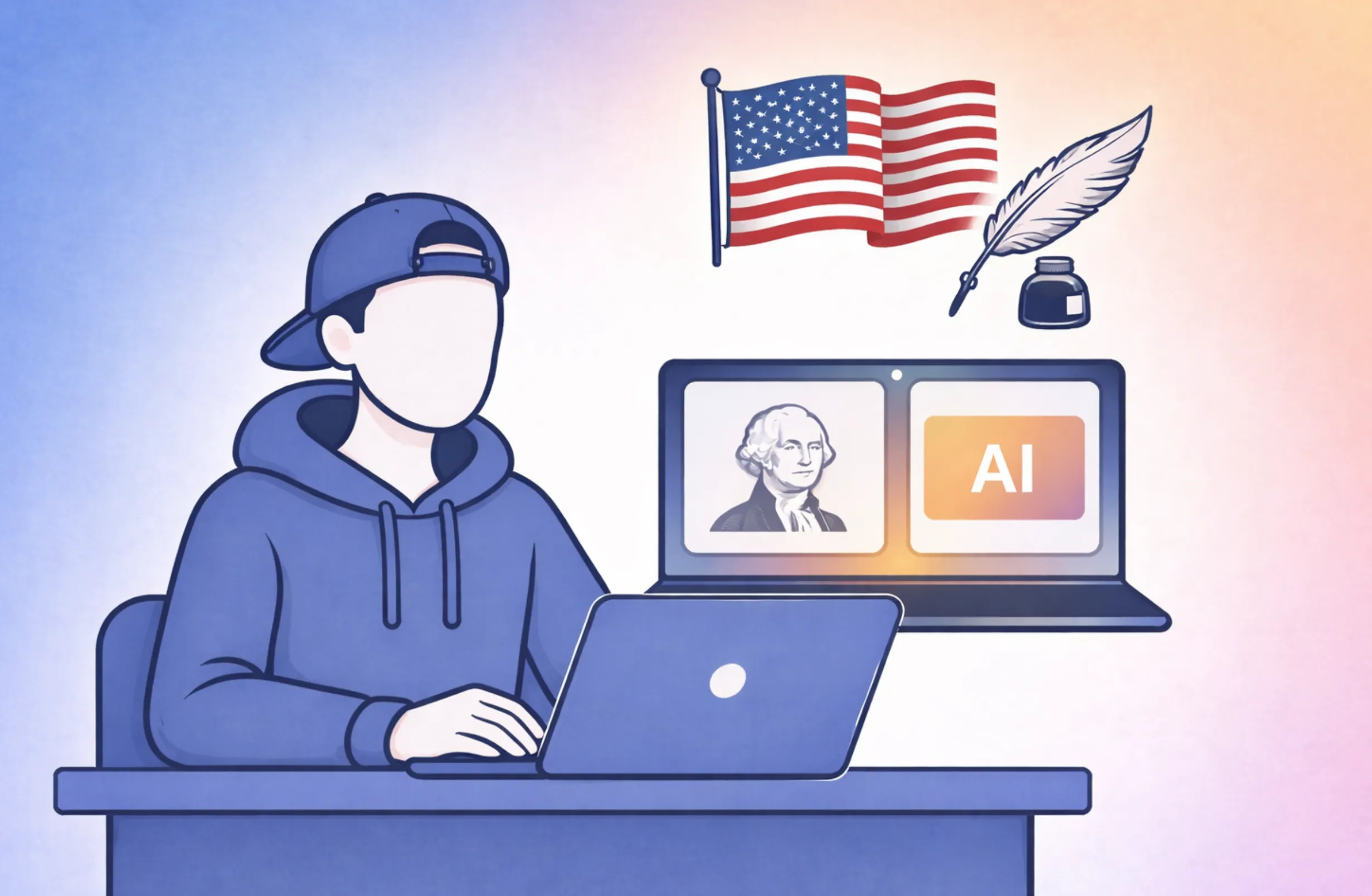
AP United States History is one of the most popular and rewarding Advanced Placement exams, offering college credit and a deep understanding of the forces that shaped America. In 2026, AI-powered study tools are transforming how students master the nine periods of APUSH. This comprehensive guide covers every period, the exam format, proven study strategies, a complete timeline, and the best AI apps to help you score a 4 or 5.
Written by Sarah Mitchell
Education Tech Researcher
Sarah specializes in AI-driven learning tools and has spent over 5 years analyzing how technology improves student outcomes on standardized exams. She has guided thousands of AP students through exam preparation strategies.
Quick APUSH Study Summary
- Exam Date: May 8, 2026 (afternoon session)
- Exam Format: 55 MCQ (55 min) + 3 SAQ (40 min) + 1 DBQ (60 min) + 1 LEQ (40 min)
- Periods: 9 total, from 1491 to the Present
- Study Timeline: School year + 4-6 weeks intensive review
- Best AI Tool: LectureScribe (lecture-to-flashcard automation)
- Top Resources: AMSCO, Heimler's History, AP Classroom
- Target Score: 3+ for credit, 4-5 for competitive advantage
Table of Contents
Introduction: AP US History in 2026
Advanced Placement United States History (APUSH) is one of the most popular AP exams, with over 450,000 students taking it each year. Administered by the College Board, the APUSH exam tests your understanding of American history from pre-Columbian civilizations through the present day. A score of 3 or higher can earn you college credit at most institutions, while a 4 or 5 demonstrates the kind of historical thinking that selective colleges reward with advanced placement.
The 2026 APUSH exam follows the College Board's curriculum framework that emphasizes historical thinking skills over rote memorization. This means you need to do more than just know dates and names. You need to analyze causation, draw comparisons across time periods, contextualize events, and trace continuity and change over time. That said, you still need a strong factual foundation to apply these higher-order skills effectively.
The good news? AI-powered study tools are making APUSH preparation more efficient than ever. Instead of spending hours creating flashcards by hand or transcribing your history teacher's lectures, tools like LectureScribe can automate these processes. This guide will show you exactly how to combine traditional study methods with cutting-edge AI to maximize your APUSH score.
APUSH Score Distribution (Recent Years)
Approximately 12% of students earn a 5, 18% earn a 4, and 23% earn a 3, giving a total pass rate of about 53%. The mean score hovers around 2.71. With focused preparation and AI tools, scoring a 4 or 5 is very achievable for dedicated students who master the historical thinking skills and practice essay writing consistently.
APUSH Exam Format & Scoring
Understanding the exam structure is essential for building an effective study plan. The APUSH exam is 3 hours and 15 minutes long and divided into two sections with four distinct question types.
Section I: MCQ + SAQ
- -Part A: 55 MCQ in 55 minutes (40% of score)
- -Part B: 3 SAQ in 40 minutes (20% of score)
- -MCQs are stimulus-based (primary sources, images, maps)
- -4 answer choices per MCQ, no penalty for guessing
- -SAQ 1-2 are required; SAQ 3-4 you choose one
- -About 1 minute per MCQ
Section II: DBQ + LEQ
- -Part A: 1 DBQ in 60 minutes (25% of score)
- -Part B: 1 LEQ in 40 minutes (15% of score)
- -DBQ includes 7 primary source documents
- -15-minute reading period for DBQ, then 45 min to write
- -LEQ: choose 1 of 3 prompts (different time periods)
- -Both require thesis, evidence, and historical reasoning
The College Board emphasizes four key historical thinking skills throughout the exam: Causation (why events happened and their effects), Comparison (similarities and differences across time), Contextualization (placing events in broader historical context), and Continuity and Change over Time (what stayed the same and what shifted). Every question type tests these skills, so you need to be comfortable applying all of them.
Pro Tip: The DBQ Scoring Secret
The DBQ rubric awards 7 points total. The most commonly missed points are Complexity (1 point for demonstrating a nuanced understanding) and Sourcing (1 point for analyzing the source, purpose, audience, or historical situation of at least 3 documents). Many students leave these points on the table. Practice identifying why each document was created and what perspective its author represents.
The 9 Periods of AP US History
APUSH is organized into 9 chronological periods, each contributing a different percentage to the exam. Understanding the weight of each period helps you allocate study time effectively. Here is a complete breakdown:
Period 1: 1491-1607
4-6% of examPre-Columbian societies, European exploration and conquest, Columbian Exchange, early encounters between Native Americans and Europeans, Spanish colonial systems.
Key topics: Native American cultures, Columbus, encomienda system, Columbian Exchange, Treaty of Tordesillas
Period 2: 1607-1754
6-8% of examColonial settlements (Jamestown, Plymouth, Massachusetts Bay), colonial economies, slavery's expansion, religious developments, colonial governance, Anglo-French rivalry.
Key topics: Jamestown, Puritans, Great Awakening, mercantilism, Middle Passage, Bacon's Rebellion, salutary neglect
Period 3: 1754-1800
10-17% of examFrench and Indian War, road to revolution, Declaration of Independence, Revolutionary War, Articles of Confederation, Constitutional Convention, early republic.
Key topics: Stamp Act, Boston Tea Party, Common Sense, Federalists vs. Anti-Federalists, Bill of Rights, Washington's presidency
Period 4: 1800-1848
10-17% of examJefferson's presidency, War of 1812, Market Revolution, Jacksonian Democracy, Second Great Awakening, reform movements, Manifest Destiny, Texas annexation.
Key topics: Louisiana Purchase, Monroe Doctrine, Nullification Crisis, Indian Removal Act, Seneca Falls, Abolitionism
Period 5: 1844-1877
10-17% of examSectionalism, Compromise of 1850, bleeding Kansas, Civil War causes and course, Emancipation Proclamation, Reconstruction, 13th-15th Amendments.
Key topics: Dred Scott, Lincoln-Douglas debates, Fort Sumter, Gettysburg, Reconstruction Amendments, Jim Crow origins
Period 6: 1865-1898
10-17% of examGilded Age, industrialization, immigration, urbanization, labor movements, Populism, westward expansion, Native American displacement, Jim Crow South.
Key topics: Robber barons, Carnegie/Rockefeller, Dawes Act, Chinese Exclusion Act, Plessy v. Ferguson, Populist Party
Period 7: 1890-1945
10-17% of examProgressivism, imperialism, World War I, Roaring Twenties, Great Depression, New Deal, World War II, home front, and the emerging global role of the United States.
Key topics: Theodore Roosevelt, women's suffrage, Treaty of Versailles, FDR, New Deal agencies, Pearl Harbor, D-Day
Period 8: 1945-1980
10-17% of examCold War, Red Scare, Civil Rights Movement, Vietnam War, Great Society, counterculture, Watergate, economic challenges of the 1970s.
Key topics: Truman Doctrine, Brown v. Board, MLK, Cuban Missile Crisis, Gulf of Tonkin, Nixon, stagflation
Period 9: 1980-Present
4-6% of examReagan Revolution, end of the Cold War, globalization, technology and society, War on Terror, political polarization, demographic shifts.
Key topics: Reaganomics, fall of Berlin Wall, 9/11, Iraq War, 2008 financial crisis, immigration debates
Study Time Allocation Tip
Periods 3 through 8 carry the heaviest exam weights, each potentially worth 10-17% of the exam. Together they can make up 60-100% of your exam content. Periods 1 and 9 are the lightest (4-6% each), but do not skip them entirely since they frequently appear in SAQ and provide essential context for understanding broader themes.
Period-by-Period Study Strategies
Each APUSH period demands a slightly different study approach. Here are targeted strategies for the most challenging and highest-weighted periods.
Periods 3-5: Revolution Through Reconstruction (The Core)
These three periods form the backbone of the APUSH exam and are the most frequently tested. Together they cover the birth of the nation, its expansion, and its near-destruction in the Civil War. Students who master these periods have a massive advantage on the exam.
- Build a master timeline. Create a detailed timeline from 1754 to 1877 showing political, economic, and social developments side by side. This helps you see how events in different categories influenced each other.
- Track the slavery debate. The issue of slavery threads through all three periods. Trace every major compromise, court case, and political conflict over slavery from the Constitutional Convention through Reconstruction.
- Know your documents. Primary sources from these periods appear constantly on the exam. Be familiar with the Declaration of Independence, Constitution, Federalist Papers, key Supreme Court decisions, and Lincoln's major speeches.
- Use LectureScribe to capture your teacher's analysis. Record history lectures on these critical periods and let LectureScribe generate flashcards covering key events, causation chains, and historical interpretations.
Periods 6-7: Gilded Age Through World War II
These periods cover America's transformation from an agrarian society into a global industrial superpower. The key challenge is tracking multiple simultaneous developments: industrialization, immigration, reform movements, and American foreign policy.
- Use thematic comparisons. Compare the reform movements of the Progressive Era with those of the Jacksonian Era (Period 4). The exam loves questions that ask you to draw connections across time periods.
- Master the New Deal. Know the major New Deal programs (AAA, CCC, TVA, Social Security), their goals, and their critics from both the left and right. FDR's presidency is one of the most heavily tested topics on the exam.
- Understand cause and effect chains. Trace how industrialization led to labor unrest, which led to Progressivism, which led to government regulation. The exam tests whether you understand these causal links.
- Create comparison flashcards. Use LectureScribe to generate cards comparing WWI and WWII causes, the Gilded Age and Progressive Era, or immigration waves. Review using spaced repetition.
Period 8: Cold War & Civil Rights (1945-1980)
This period is a favorite for DBQ and LEQ prompts because it offers rich opportunities to analyze causation, comparison, and continuity and change over time. The Civil Rights Movement and Cold War are two of the most commonly tested topics across the entire exam.
- Know the Civil Rights timeline cold. From Brown v. Board (1954) through the Civil Rights Act (1964) and Voting Rights Act (1965), you need to know every major event, leader, and strategy used by the movement.
- Understand Cold War containment. Trace the policy of containment from Truman through Nixon. Know how it manifested in Korea, Cuba, Vietnam, and the broader arms race.
- Connect domestic and foreign policy. The exam often asks how Cold War pressures influenced domestic civil rights progress, or how Vietnam affected American politics. Think about these connections as you study.
- Watch Heimler's History videos for engaging period reviews, then upload your own class recordings to LectureScribe for personalized flashcards that match your teacher's emphasis.
DBQ & LEQ Mastery
The essay section is where APUSH exams are won or lost. The DBQ alone is worth 25% of your total score, making it the single most important question on the exam. The LEQ adds another 15%. Together, these two essays determine 40% of your grade, so mastering essay writing is non-negotiable.
The DBQ provides 7 primary source documents and asks you to construct an argument using those documents plus your own outside knowledge. The LEQ gives you a prompt with no documents and asks you to build an argument entirely from your own knowledge using historical thinking skills.
Strategy 1: Write a Strong Thesis
Your thesis is worth 1 point on both the DBQ and LEQ, and it sets the direction for your entire essay. A strong APUSH thesis must:
- Take a defensible position that directly responds to the prompt.
- Establish a line of reasoning that previews your argument categories.
- Go beyond restating the prompt. Do not just say "there were many causes." Identify the specific causes you will argue.
- Place it in your introduction. Graders look for it in the first paragraph.
Strategy 2: Master Document Analysis (DBQ)
You must use at least 4 of the 7 documents to earn the evidence points, but aim to use all 7. For each document you cite, briefly explain how it supports your argument. Do not just quote or summarize the document. For the sourcing point, analyze the historical situation, audience, purpose, or point of view of at least 3 documents. Ask yourself: "Why was this document created, and how does that context affect its meaning?"
Strategy 3: Include Outside Evidence
Both the DBQ and LEQ award points for specific historical evidence beyond what is provided in the documents. For the DBQ, you need at least one piece of outside evidence. For the LEQ, your entire argument must rely on specific evidence from your own knowledge. Name specific people, events, laws, treaties, and dates. Vague references like "the government passed laws" will not earn evidence points.
Strategy 4: Earn the Complexity Point
The complexity point is the hardest point to earn on the DBQ and LEQ rubrics. To earn it, you must demonstrate a nuanced understanding of the topic. Strategies include: explaining both similarities and differences, connecting the topic to a different time period or geographic area, qualifying your argument by acknowledging counterevidence, or explaining how the historical development you describe relates to broader processes. The best approach is to include a paragraph that directly addresses a counterargument or complication in your thesis.
DBQ & LEQ Practice Recommendation
Write at least 1 full DBQ and 1 LEQ per week during your final review period. Time yourself strictly (60 minutes for DBQ, 40 minutes for LEQ). Then grade yourself using the College Board scoring rubrics, which are publicly available for past exams. Recording yourself explaining your thesis and argument structure, then running the audio through LectureScribe, can help you identify gaps in your historical reasoning.
MCQ & SAQ Strategies
The 55 multiple-choice questions on APUSH are all stimulus-based, meaning each question or set of questions is tied to a primary source excerpt, image, map, or chart. Unlike some AP exams, you will never see a standalone fact-recall question. Every MCQ tests your ability to analyze a source and apply historical thinking skills.
The 3 short-answer questions (SAQs) require brief written responses (no thesis needed) that demonstrate your knowledge of specific historical developments. Here are the techniques that consistently help students improve their scores:
Read the Source Before the Question
Spend 30-60 seconds analyzing the stimulus before reading the questions. Identify the author, date, audience, and main argument. Ask yourself: "What period is this from? What historical context surrounds this source?" This preparation makes answering the associated questions much faster and more accurate.
Eliminate Anachronistic Answers
A common APUSH MCQ trap is including answer choices that are factually true but belong to the wrong time period. If a source is from 1820, an answer choice about Populism (1890s) is automatically wrong regardless of how reasonable it sounds. Always check that your answer fits the time period of the stimulus.
For SAQs: Answer in Three Sentences
Each SAQ part (a, b, c) requires a concise response. The ideal format is: (1) a claim that directly answers the question, (2) specific historical evidence supporting your claim, and (3) a brief explanation of how that evidence supports your answer. You do not need a thesis, transitions, or a conclusion. Just answer each part directly and move on.
Flag and Return
With 55 questions in 55 minutes, you average exactly 1 minute per MCQ. If a question takes more than 90 seconds, flag it and move on. Spending too long on one difficult question means rushing through easier ones. Return to flagged questions after completing the rest of the section.
Complete APUSH Study Timeline
Like other AP exams, APUSH preparation happens primarily during the school year. Your APUSH class provides the foundation, but the final 4-6 weeks before the May 8 exam are when targeted review makes the biggest difference in your score.
During the School Year (September - March)
Build a strong foundation as you learn each period in class.
Weekly Habits
- - Record your APUSH lectures and upload to LectureScribe within 24 hours
- - Review generated flashcards the same day (initial encoding)
- - Complete all assigned readings from AMSCO or your class textbook
- - Take notes actively: build timelines, write cause-and-effect summaries
- - Start building a cumulative Anki deck, reviewing 30-50 cards daily
- - Complete AP Classroom progress checks after each topic
After Each Unit Test
- - Analyze your mistakes: categorize them as content gaps, misreading, or reasoning errors
- - Create additional flashcards for events, people, and connections you missed
- - Write a one-page summary connecting the period to previous periods
- - Attempt 1-2 past AP SAQs or LEQs related to the period you just completed
6-Week Intensive Review (Late March - May 8)
This is where you transform from "learned it in class" to "exam ready." Allocate 2-3 hours daily.
Weeks 1-2: Content Review Blitz
- - Review all 9 periods using AMSCO or your class notes
- - Re-listen to key lectures through LectureScribe transcripts
- - Focus extra time on Periods 3-5 and 7-8 (highest exam weight and frequency)
- - Increase Anki review to 100+ cards daily
- - Watch Heimler's History period review videos for engaging summaries
- - Take the first full-length AP practice exam (time yourself strictly)
Weeks 3-4: Essay Practice & Weak Spots
- - Analyze practice exam results and identify your weakest 2-3 periods
- - Complete AP Classroom question bank for weak periods
- - Write 1 full DBQ and 1 LEQ per week (timed) and self-grade with rubrics
- - Practice SAQ responses: aim for concise, evidence-rich answers
- - Take second full-length practice exam
Weeks 5-6: Exam Simulation & Confidence
- - Take final full-length practice exam under real conditions
- - Review all flagged Anki cards (focus on "hard" and "again" cards)
- - Do a rapid review of all 9 periods using one-page summary sheets
- - Practice 1 DBQ thesis and 2 SAQ responses daily from released exams
- - Final 2 days: light review, rest, and confidence building
AI Time Savings for APUSH
Students using LectureScribe for APUSH report saving approximately: 8-12 hours on flashcard creation across the school year, 5-8 hours on note organization and summarization, and 3-5 hours on creating review materials. That is 16-25 extra hours you can redirect to DBQ practice, LEQ writing, and SAQ responses, which have the highest correlation with score improvement.
How AI Transforms APUSH Preparation
Traditional APUSH prep involves hours of textbook reading, manual flashcard creation, and re-watching class recordings at 2x speed. AI tools in 2026 address each of these pain points while freeing up time for higher-value activities like essay writing practice and document analysis.
Automated Flashcard Generation
APUSH has hundreds of key people, events, laws, court cases, and thematic connections to memorize. Creating flashcards manually for every lecture takes 2-3 hours per period. LectureScribe reduces this to minutes by analyzing your lecture recordings and generating targeted flashcards automatically. The cards cover vocabulary, cause-and-effect relationships, and the specific historical interpretations your teacher emphasizes.
Intelligent Note Summarization
A typical APUSH course involves 120+ hours of lecture content across the school year. AI tools can condense each lecture into structured summaries organized by key themes (politics, economics, society, culture), making it easy to review an entire period's worth of content in 30 minutes instead of re-watching hours of recordings.
Thematic Connection Building
The APUSH exam rewards students who can connect themes across time periods. AI tools can help you identify patterns by analyzing your notes from different periods and surfacing connections, such as how the debate over federal power appears in Period 3 (Federalists vs. Anti-Federalists), Period 4 (Nullification Crisis), Period 5 (secession), and Period 7 (New Deal). These cross-period connections are essential for earning the complexity point on essays.
Best AI Apps for APUSH Prep in 2026
The right combination of tools makes APUSH preparation dramatically more efficient. Here are the best options for each aspect of studying.
LectureScribe
AI-Powered Lecture Transcription & Flashcard Generation
LectureScribe is the ideal study companion for AP US History. Record your history teacher's lectures on the Civil War, Reconstruction, or the Cold War, then upload the recording. Within minutes, LectureScribe generates organized notes, targeted flashcards, and visual study guides covering exactly what your teacher covered. This is especially powerful because APUSH exams often test the specific emphases and historical interpretations your teacher uses.
Upload a 50-minute APUSH lecture and get 40-60 targeted flashcards covering key people, events, dates, causes, effects, and historical interpretations your teacher emphasized.
AI creates organized timelines and thematic study guides for each period, connecting political, economic, and social developments in an easy-to-review format.
Works with live lecture recordings, YouTube history videos (like Heimler's History), textbook chapter PDFs, and even photos of your handwritten history notes.
Export all generated flashcards directly to Anki format for spaced repetition review throughout the school year.
Pricing
1 Free Upload | $9.99/month
Anki
Free spaced repetition for long-term memorization
Anki's spaced repetition algorithm is the gold standard for memorizing the hundreds of people, events, dates, and thematic connections in APUSH. Import flashcards generated by LectureScribe, or use pre-made APUSH Anki decks to get started immediately. Daily Anki reviews of just 15-20 minutes keep your knowledge fresh across all 9 periods throughout the school year.
Pricing
Free (Desktop & Android) | $24.99 (iOS)
AP Classroom
Official College Board practice questions and resources
AP Classroom is the College Board's own platform, and it contains the most exam-representative practice questions available. It includes progress checks for every topic, practice exams with real stimulus-based MCQs, and an extensive question bank. Since the APUSH exam is written by the College Board, these materials give you the closest possible preview of what you will see on test day.
Pricing
Free (through your AP course enrollment)
Heimler's History
Engaging YouTube video reviews for every APUSH period and topic
Heimler's History is the most popular APUSH YouTube channel, offering concise and engaging video reviews for every period and topic in the curriculum. His DBQ and LEQ walkthrough videos are especially valuable for learning essay structure. Pro tip: upload Heimler's videos to LectureScribe to generate flashcards from his explanations, giving you the best of both worlds.
Pricing
Free (YouTube)
Recommended APUSH Study Stack
Combine these tools for the most efficient APUSH prep:
- 1LectureScribe - Convert history lectures into flashcards and study guides ($9.99/mo)
- 2Anki - Review flashcards with spaced repetition daily (Free)
- 3AP Classroom - Official practice questions and progress checks (Free)
- 4AMSCO United States History - The definitive APUSH review textbook (~$25)
- 5Heimler's History - Engaging video reviews for every period and topic (Free)
Total investment: ~$145 for the year. Compare to private APUSH tutoring at $50-100 per hour.
Common APUSH Mistakes to Avoid
After reviewing thousands of APUSH exam responses and interviewing students, these are the most common mistakes that cost points on exam day.
Not Providing Specific Evidence in FRQs
The most common mistake on APUSH essays is making vague claims without specific evidence. Saying "many people opposed the war" earns zero points. Saying "Senator Robert La Follette and the Progressive anti-imperialists opposed U.S. entry into World War I, arguing it served corporate interests rather than democratic ideals" earns evidence points. Always name specific people, events, laws, and dates in your essays.
Confusing Similar Time Periods
APUSH covers so much material that students frequently mix up events from similar periods. Common confusions include: the First and Second Great Awakenings, the various compromises over slavery (Missouri Compromise, Compromise of 1850, Kansas-Nebraska Act), and the different waves of immigration. Build comparison charts to keep these distinct in your memory.
Writing Weak Thesis Statements
A weak thesis is the #1 reason students lose points on the DBQ and LEQ. Common thesis mistakes include: simply restating the prompt, listing topics without making an argument, and being too vague ("there were many causes and effects"). A strong thesis takes a clear position and previews the specific categories of evidence you will use to support your argument.
Memorizing Facts Without Understanding Themes
APUSH rewards historical thinking, not just recall. A student who understands why Reconstruction failed (political compromise, economic interests, racial attitudes) will score higher than one who memorized every Reconstruction-era law but cannot explain the broader significance. Always study with the "so what?" question in mind: why does this event matter in the larger story of American history?
Neglecting Document Sourcing on the DBQ
Many students use documents as evidence but forget to analyze why each document was created. The sourcing point requires you to explain the historical situation, audience, purpose, or point of view of at least 3 documents. This is a free point that most students leave on the table. Practice asking "Who wrote this, when, why, and for whom?" for every document you encounter.
Score Targets & College Credit
Understanding what each APUSH score means for college credit helps you set realistic goals and stay motivated throughout your preparation.
Score of 5: Extremely Well Qualified
Earned by approximately 12% of test-takers. A 5 earns credit at virtually all colleges, often exempting you from introductory US history courses entirely. At selective schools, a 5 demonstrates the kind of analytical thinking valued in college-level history courses.
What it takes: Consistently scoring 70%+ on practice exams, strong DBQ and LEQ writing with clear theses and specific evidence, and deep understanding of all 9 periods with strong cross-period thematic connections.
Score of 4: Well Qualified
Earned by approximately 18% of test-takers. A 4 earns credit at most colleges and is considered a strong score that demonstrates genuine mastery of US history. Many state universities grant a full semester of history credit for a 4.
What it takes: Solid understanding of all periods, ability to score 55-70% on practice exams, competent essay responses with defensible theses and adequate specific evidence.
Score of 3: Qualified
Earned by approximately 23% of test-takers. A 3 is the minimum score for college credit at many institutions, though some competitive schools require a 4 or 5. Even if your target school does not accept a 3, the historical thinking skills you develop during APUSH provide an excellent foundation for college-level courses.
What it takes: Reasonable understanding of most periods, ability to write essays with a thesis and some specific evidence, scoring 45-55% on practice exams.
History Majors & Social Science Students
If you are planning to study history, political science, or any social science in college, APUSH is one of the most valuable APs you can take. The historical thinking skills you develop, especially document analysis, argumentative writing, and thematic reasoning, transfer directly to college-level humanities courses. Students who took APUSH consistently report feeling more prepared for college history seminars and research papers.
Frequently Asked Questions About AP US History
How long should I study for the AP US History exam?
Most students prepare throughout the school year during their APUSH course, then add 4-6 weeks of intensive review before the May exam. During the school year, plan for 1-2 hours of study per day on top of class time. In the final review period, increase to 2-3 hours daily, focusing heavily on DBQ and LEQ practice. AI tools like LectureScribe can reduce content review time by converting your history lectures into flashcards automatically, making this timeline more manageable.
What is the hardest period in AP US History?
Period 4 (1800-1848) and Period 5 (1844-1877) are widely considered the most challenging APUSH periods. Period 4 covers the Market Revolution, Jacksonian Democracy, reform movements, and Manifest Destiny, requiring students to track numerous overlapping developments. Period 5 covers the lead-up to the Civil War, the war itself, and Reconstruction, with dense cause-and-effect chains that students frequently confuse on the exam.
What are the best tips for writing the APUSH DBQ?
The DBQ is worth 25% of your APUSH score. To excel: write a clear, defensible thesis that takes a position. Use at least 4 of the 7 documents as evidence, explaining how each supports your thesis. Include at least one piece of outside evidence not found in the documents. Provide historical context by connecting the topic to broader trends. Analyze the source, purpose, audience, or historical situation of at least 3 documents for the sourcing point. Practice under timed conditions at least once per week.
What is the best review book for APUSH?
AMSCO United States History is widely considered the best APUSH review book because it aligns directly with the College Board curriculum framework and covers all 9 periods with the right level of detail. For additional practice, Princeton Review's Cracking the AP US History Exam offers excellent practice tests. Combine these with LectureScribe for converting your class lectures into study materials and Heimler's History YouTube channel for engaging video reviews.
How much is the DBQ worth on the APUSH exam?
The Document-Based Question (DBQ) is worth 25% of your total APUSH exam score, making it the single highest-weighted question on the exam. You get 60 minutes total: a 15-minute reading period to analyze the 7 documents, followed by 45 minutes to write your essay. Given its weight, mastering DBQ writing is the single most impactful thing you can do to improve your APUSH score.
How is the AP US History exam scored?
The APUSH exam has two sections: Section I includes 55 multiple-choice questions (55 minutes, worth 40%) and 3 short-answer questions (40 minutes, worth 20%). Section II includes 1 document-based question (60 minutes, worth 25%) and 1 long essay question (40 minutes, worth 15%). Your raw score is converted to a 1-5 scale. Approximately 53% of students earn a 3 or higher.
Ready to Ace AP US History?
Transform your history lectures into flashcards, study guides, and review materials instantly
Try LectureScribe Free - No Credit Card RequiredUpload your APUSH lectures and start generating study materials in minutes
Need Pre-Made APUSH Flashcards?
Access our comprehensive AP US History flashcard collection covering all 9 periods, key people, events, court cases, and exam-style questions.
Related Articles
AI Flashcard Maker
Create flashcards instantly from any lecture, textbook, or notes using AI.
How to Study for AP Biology 2026
Complete AP Biology study guide with AI-powered tools and proven strategies.
Browse All Study Materials
Explore our full library of AI-generated study materials across all subjects.
More AP Exam Guides
Browse all our AP exam study guides with AI-powered strategies and tips.