About Environmental Science
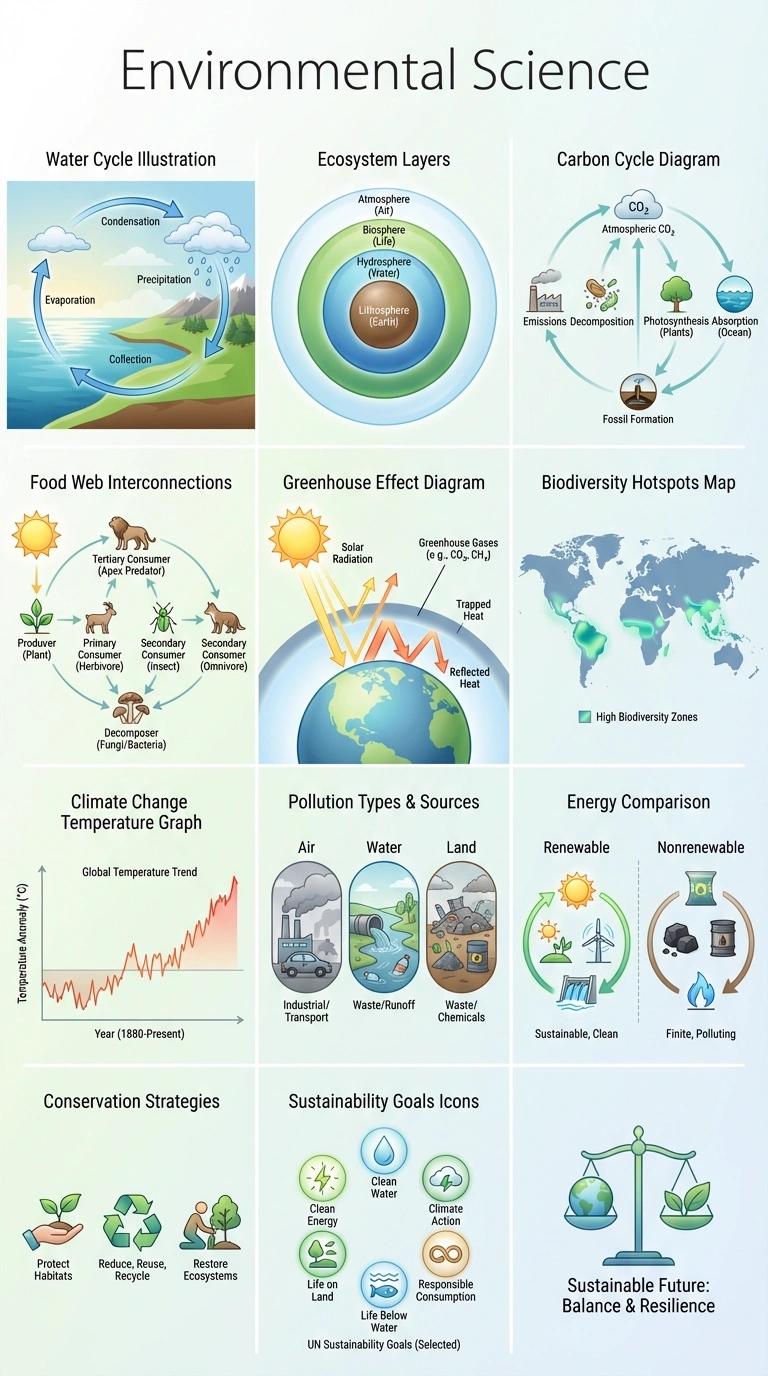
Environmental Science studies the interactions between physical, chemical, and biological components of the environment, with emphasis on human impacts and sustainability.
The field is inherently interdisciplinary, drawing on ecology, chemistry, geology, atmospheric science, and social sciences. Environmental scientists study pollution, climate change, biodiversity loss, and resource management.
Research methods range from field sampling and lab analysis to remote sensing and computer modeling. Environmental scientists collect data, analyze trends, assess risks, and inform policy decisions.
The field addresses urgent global challenges - climate change, biodiversity loss, pollution, resource depletion. Careers span research, consulting, government agencies, nonprofits, and corporate sustainability. Understanding environmental issues is increasingly important in many fields.
Study Environmental Science Smarter with LectureScribe
Visual learning has been proven to improve retention by up to 65%. That's why LectureScribe lets you create custom Environmental Science infographics from your own lecture content. Upload a recording, notes, or PDF, and our AI generates beautiful visual study guides that highlight key concepts and relationships. Combined with AI-generated quizzes and flashcards, LectureScribe gives you everything you need to master Environmental Science.