LectureScribe Logo
lecturescribe.io

LOCK IN VALENTINE PRICING BEFORE SALE ENDS!

Use code — New joiners get 40% OFF on annual plans

Plans will have higher prices after this sale ends

0days
:
0hours
:
0minutes
:
0seconds
Pharmacology2,500+ words5 slides
💊

Diabetes Medications: Insulin Types and Oral Hypoglycemics

Learn about diabetes medications including insulin types, oral hypoglycemics like metformin, and modern diabetes treatment strategies. A complete pharmacology guide for students.

L
LectureScribeAI-Powered Study Platform

Study Infographic

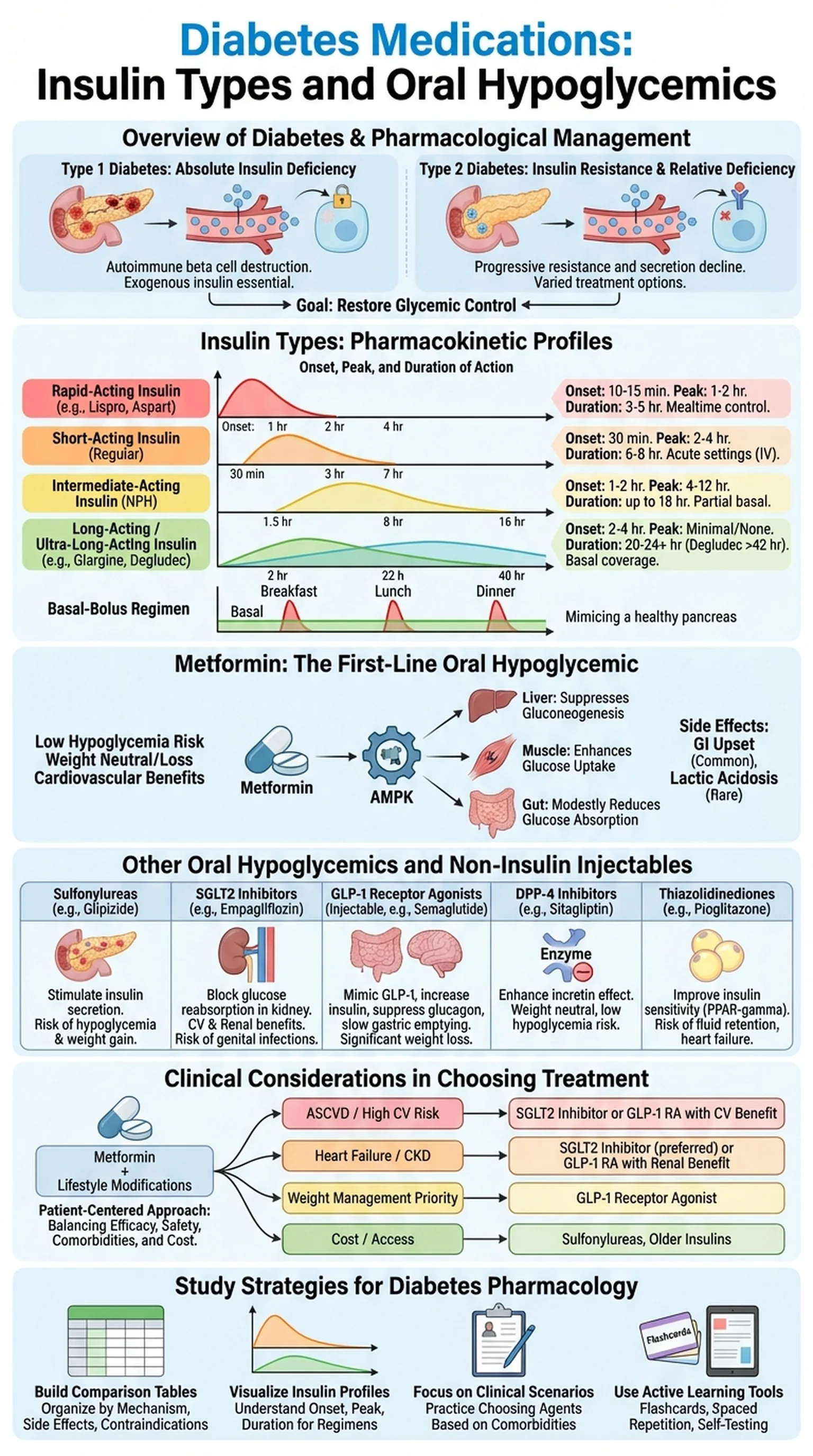
Comprehensive diabetes medications infographic comparing insulin types by onset and duration alongside oral hypoglycemics and their mechanisms of action.

Download
Diabetes medications overview showing insulin types timeline and oral hypoglycemics mechanism of action chart

Interactive Study Short

Swipe through 5 slides about Diabetes Medications: Insulin Types and Oral Hypoglycemics

1 / 5

Overview of Diabetes and Its Pharmacological Management

Diabetes mellitus is a chronic metabolic disorder characterized by persistent hyperglycemia resulting from defects in insulin secretion, insulin action, or both. The two major forms, Type 1 and Type 2, differ fundamentally in their pathophysiology and therefore require distinct pharmacological approaches. Type 1 diabetes is an autoimmune condition in which pancreatic beta cells are destroyed, leading to absolute insulin deficiency. Type 2 diabetes, which accounts for roughly 90 percent of all cases, involves progressive insulin resistance and a relative decline in insulin secretion over time.

Diabetes medications encompass a broad spectrum of agents designed to restore glycemic control. For Type 1 patients, exogenous insulin is the cornerstone of diabetes treatment, since the body can no longer produce its own. For Type 2 patients, the therapeutic landscape is far more varied, ranging from oral hypoglycemics such as metformin and sulfonylureas to injectable agents including GLP-1 receptor agonists and, eventually, insulin itself when oral agents fail to maintain adequate control.

Understanding the pharmacology of these agents is critical for medical students, nursing students, and pharmacy students alike. The choice of diabetes treatment depends on multiple factors: the type and severity of diabetes, the patient's comorbidities, risk of hypoglycemia, cost considerations, and patient preference. Modern guidelines emphasize a patient-centered approach in which clinicians select from the available diabetes medications based on individual risk-benefit profiles. This section provides the foundation for understanding the insulin types and oral hypoglycemics that form the pillars of diabetes pharmacotherapy.

Key Terms

Diabetes Mellitus

A group of metabolic diseases characterized by chronic hyperglycemia resulting from defects in insulin secretion, insulin action, or both.

Hyperglycemia

Abnormally elevated blood glucose levels, the hallmark of uncontrolled diabetes.

Insulin Resistance

A condition in which target tissues such as muscle, liver, and adipose fail to respond adequately to normal circulating levels of insulin.

Beta Cells

Endocrine cells located in the islets of Langerhans of the pancreas that produce and secrete insulin.

Insulin Types: Rapid-Acting, Short-Acting, Intermediate, and Long-Acting

Exogenous insulin preparations are classified by their onset, peak, and duration of action. Understanding the different insulin types is essential for designing regimens that mimic the physiological pattern of insulin secretion, which includes both basal (background) and bolus (mealtime) components.

Rapid-acting insulin types include insulin lispro, insulin aspart, and insulin glulisine. These analogs begin working within 10 to 15 minutes of subcutaneous injection, peak at 1 to 2 hours, and last approximately 3 to 5 hours. They are administered immediately before or after meals to control postprandial glucose spikes. Short-acting insulin, also called regular insulin, has a slightly slower onset of about 30 minutes, peaks at 2 to 4 hours, and lasts 6 to 8 hours. Regular insulin is the only insulin type that can be administered intravenously, making it essential in acute settings such as diabetic ketoacidosis.

Intermediate-acting insulin, represented by NPH (neutral protamine Hagedorn), has an onset of 1 to 2 hours, peaks at 4 to 12 hours, and lasts up to 18 hours. NPH provides partial basal coverage but its pronounced peak can increase the risk of hypoglycemia. Long-acting insulin types include insulin glargine and insulin detemir, which provide a relatively peakless basal profile lasting 20 to 24 hours. Ultra-long-acting insulin degludec extends this further with a duration exceeding 42 hours. These basal insulin types are fundamental to diabetes treatment regimens because they suppress hepatic glucose output between meals and overnight, providing a foundation upon which mealtime boluses are layered.

Key Terms

Rapid-Acting Insulin

Insulin analogs such as lispro, aspart, and glulisine that begin working within 10-15 minutes and are used to cover mealtime glucose excursions.

NPH Insulin

An intermediate-acting insulin formulation using protamine to delay absorption, providing partial basal coverage with a notable peak effect.

Insulin Glargine

A long-acting insulin analog that forms microprecipitates at physiological pH, providing a nearly peakless 24-hour basal insulin profile.

Basal-Bolus Regimen

An insulin dosing strategy combining a long-acting basal insulin with rapid-acting bolus doses at mealtimes to mimic normal pancreatic secretion.

Insulin Degludec

An ultra-long-acting insulin analog with a duration exceeding 42 hours and minimal day-to-day variability in glucose-lowering effect.

Metformin: The First-Line Oral Hypoglycemic

Metformin is universally regarded as the first-line pharmacological agent for Type 2 diabetes and is the most widely prescribed of all oral hypoglycemics. Belonging to the biguanide class, metformin lowers blood glucose primarily by reducing hepatic glucose production and improving insulin sensitivity in peripheral tissues, particularly skeletal muscle. Unlike sulfonylureas and insulin, metformin does not stimulate insulin secretion and therefore carries a very low risk of hypoglycemia when used as monotherapy.

The mechanism of action of metformin centers on activation of AMP-activated protein kinase (AMPK), a key cellular energy sensor. By activating AMPK, metformin suppresses gluconeogenesis in the liver, enhances glucose uptake in muscle, and modestly reduces intestinal absorption of glucose. These effects collectively lower fasting and postprandial blood glucose levels. Additionally, metformin has favorable effects on body weight, often producing modest weight loss or weight neutrality, which is particularly advantageous in overweight and obese patients with Type 2 diabetes.

Metformin is generally well tolerated, though gastrointestinal side effects such as nausea, diarrhea, and abdominal discomfort are common at initiation and can be minimized by starting at a low dose and titrating slowly. The most serious adverse effect, lactic acidosis, is extremely rare but can occur in patients with significant renal impairment, hepatic failure, or conditions predisposing to tissue hypoxia. Current guidelines recommend checking renal function before initiating metformin and periodically thereafter. Among all diabetes medications, metformin stands out for its proven efficacy, safety profile, cardiovascular benefits demonstrated in long-term studies, and affordability, solidifying its role as the backbone of diabetes treatment for Type 2 patients worldwide.

Key Terms

Metformin

A biguanide oral hypoglycemic agent that reduces hepatic glucose production and improves insulin sensitivity; the first-line drug for Type 2 diabetes.

AMPK

AMP-activated protein kinase, a cellular energy sensor that metformin activates to suppress gluconeogenesis and enhance glucose uptake.

Lactic Acidosis

A rare but potentially fatal metabolic complication associated with metformin use, occurring primarily in patients with renal or hepatic impairment.

Gluconeogenesis

The metabolic pathway by which the liver synthesizes glucose from non-carbohydrate precursors; a major target of metformin's glucose-lowering effect.

Other Oral Hypoglycemics and Non-Insulin Injectables

Beyond metformin, the pharmacological armamentarium for Type 2 diabetes includes several additional classes of oral hypoglycemics and non-insulin injectable agents. Sulfonylureas such as glipizide, glyburide, and glimepiride stimulate pancreatic beta cells to release more insulin by binding to and closing ATP-sensitive potassium channels. While effective at lowering glucose, sulfonylureas carry a risk of hypoglycemia and weight gain, which limits their use in some patients.

Thiazolidinediones (TZDs), including pioglitazone and rosiglitazone, activate peroxisome proliferator-activated receptor gamma (PPAR-gamma) in adipose tissue, improving insulin sensitivity. However, TZDs have been associated with fluid retention, heart failure exacerbation, and bone fractures, which has tempered their popularity. DPP-4 inhibitors such as sitagliptin and linagliptin enhance the incretin effect by preventing the degradation of endogenous GLP-1 and GIP, leading to glucose-dependent insulin secretion and glucagon suppression. These oral hypoglycemics are weight-neutral and have a low risk of hypoglycemia.

SGLT2 inhibitors, including empagliflozin, dapagliflozin, and canagliflozin, represent one of the most significant advances in diabetes medications. They work by blocking glucose reabsorption in the proximal tubule of the kidney, causing glycosuria and lowering blood glucose independently of insulin. Remarkably, SGLT2 inhibitors have demonstrated cardiovascular and renal protective benefits in large clinical trials, making them preferred agents for patients with heart failure or chronic kidney disease. Among injectable agents, GLP-1 receptor agonists such as semaglutide and liraglutide promote glucose-dependent insulin secretion, suppress glucagon, slow gastric emptying, and reduce appetite, leading to significant weight loss. These agents have transformed diabetes treatment by addressing both glycemic control and obesity.

Key Terms

Sulfonylureas

A class of oral hypoglycemics that stimulate insulin secretion from pancreatic beta cells by closing ATP-sensitive potassium channels.

SGLT2 Inhibitors

Diabetes medications that block the sodium-glucose cotransporter 2 in the kidney, causing glucose excretion in urine and providing cardiovascular and renal benefits.

GLP-1 Receptor Agonists

Injectable diabetes medications that mimic the incretin hormone GLP-1, promoting insulin secretion, suppressing glucagon, and aiding weight loss.

DPP-4 Inhibitors

Oral agents that inhibit dipeptidyl peptidase-4, prolonging the action of endogenous incretins to enhance glucose-dependent insulin release.

Incretin Effect

The augmented insulin response to oral glucose compared to intravenous glucose, mediated by gut hormones GLP-1 and GIP.

Clinical Considerations in Choosing Diabetes Treatment

Selecting the appropriate diabetes treatment requires integrating patient-specific factors with evidence-based guidelines. The American Diabetes Association and European Association for the Study of Diabetes recommend metformin as first-line therapy for most patients with Type 2 diabetes, combined with lifestyle modifications including diet, exercise, and weight management. When metformin alone is insufficient to achieve glycemic targets, clinicians must choose among the various diabetes medications based on individual patient characteristics.

For patients with established atherosclerotic cardiovascular disease, guidelines strongly recommend adding an SGLT2 inhibitor or GLP-1 receptor agonist with proven cardiovascular benefit. For patients with heart failure, SGLT2 inhibitors are preferred due to their demonstrated ability to reduce hospitalizations. For those with chronic kidney disease, both SGLT2 inhibitors and certain GLP-1 receptor agonists offer renal protective effects. When weight management is a priority, GLP-1 receptor agonists provide the most significant weight reduction among non-insulin diabetes medications.

Cost and access remain important determinants of diabetes treatment selection. Metformin and sulfonylureas are available as inexpensive generics, whereas newer agents such as SGLT2 inhibitors and GLP-1 receptor agonists are substantially more costly. Insulin types also vary widely in price, with older formulations like NPH and regular insulin being more affordable than analog insulin types such as glargine and degludec. Clinicians must balance efficacy, safety, cardiovascular and renal outcomes, patient preference, and affordability when constructing a treatment plan. The growing array of oral hypoglycemics and injectable agents means that virtually every patient can find a regimen tailored to their specific needs, making modern diabetes treatment more personalized and effective than ever before.

Key Terms

Glycemic Target

The individualized blood glucose or HbA1c goal set for a patient, typically an HbA1c below 7% for most adults with diabetes.

HbA1c

Glycated hemoglobin; a laboratory measure reflecting average blood glucose levels over the preceding 2-3 months, used to monitor diabetes control.

Atherosclerotic Cardiovascular Disease

A condition involving plaque buildup in arterial walls, a major comorbidity influencing diabetes medication selection.

Lifestyle Modifications

Non-pharmacological interventions including diet, physical activity, and weight management that form the foundation of diabetes treatment.

Study Strategies for Diabetes Pharmacology

Diabetes pharmacology is a high-yield topic on professional examinations including the USMLE, NAPLEX, and NCLEX. Mastering the various insulin types and oral hypoglycemics requires an organized approach that connects drug mechanisms to clinical decision-making.

First, build a comparison table of all major drug classes. For each class of diabetes medications, record the mechanism of action, route of administration, major side effects, contraindications, and unique clinical advantages. Organizing information this way makes it easier to distinguish between agents like metformin, which suppresses hepatic glucose production, and sulfonylureas, which stimulate insulin secretion. Second, learn the insulin types by grouping them according to their pharmacokinetic profiles. Create a timeline showing the onset, peak, and duration of rapid-acting, short-acting, intermediate-acting, and long-acting insulin types. Visualizing these profiles helps you understand why specific combinations are used in basal-bolus regimens.

Third, focus on clinical scenarios. Exam questions often present a patient with specific comorbidities and ask which diabetes treatment is most appropriate. Practice identifying when to choose an SGLT2 inhibitor (heart failure, CKD), a GLP-1 receptor agonist (obesity, cardiovascular risk), or when to escalate to insulin. Fourth, understand adverse effects deeply. Knowing that metformin causes GI upset and rarely lactic acidosis, that sulfonylureas cause hypoglycemia, and that SGLT2 inhibitors increase the risk of genital mycotic infections allows you to answer safety-focused questions confidently.

Finally, use active learning tools to reinforce retention. Platforms like LectureScribe can transform your pharmacology lecture notes into flashcards, slide decks, and practice questions tailored to diabetes medications, oral hypoglycemics, and insulin types, helping you retain complex material through spaced repetition and self-testing.

Key Terms

Pharmacokinetics

The study of how the body absorbs, distributes, metabolizes, and excretes a drug, determining its onset, peak, and duration of action.

USMLE

The United States Medical Licensing Examination; a multi-step professional exam required for medical licensure in the United States.

Spaced Repetition

A learning technique involving review of material at progressively increasing intervals to enhance long-term retention of pharmacological concepts.

Frequently Asked Questions

What are the main types of diabetes medications?

The main types of diabetes medications include insulin (rapid-acting, short-acting, intermediate-acting, and long-acting), and oral or injectable agents such as metformin, sulfonylureas, DPP-4 inhibitors, SGLT2 inhibitors, thiazolidinediones, and GLP-1 receptor agonists. The choice depends on diabetes type, patient comorbidities, and treatment goals.

What are the different insulin types and how do they differ?

Insulin types are categorized by their pharmacokinetic profiles. Rapid-acting insulins (lispro, aspart) work within 10-15 minutes. Short-acting regular insulin has a 30-minute onset. Intermediate-acting NPH lasts up to 18 hours with a notable peak. Long-acting insulins like glargine and detemir provide nearly peakless 24-hour coverage for basal needs.

Why is metformin considered the first-line diabetes treatment?

Metformin is first-line because it effectively lowers blood glucose by reducing hepatic glucose production and improving insulin sensitivity without causing hypoglycemia or weight gain. It is also affordable, has a strong safety record, and has demonstrated cardiovascular benefits in long-term clinical trials.

What are oral hypoglycemics and how do they work?

Oral hypoglycemics are non-insulin medications taken by mouth to lower blood glucose in Type 2 diabetes. They work through various mechanisms: metformin reduces liver glucose output, sulfonylureas stimulate insulin secretion, DPP-4 inhibitors enhance incretin action, SGLT2 inhibitors block renal glucose reabsorption, and thiazolidinediones improve insulin sensitivity.

What is the difference between basal and bolus insulin?

Basal insulin refers to long-acting formulations like glargine or detemir that provide background insulin coverage over 20-24 hours, suppressing glucose production between meals. Bolus insulin refers to rapid- or short-acting formulations injected at mealtimes to control postprandial glucose spikes. Together, they form the basal-bolus regimen.

What are the side effects of common diabetes medications?

Side effects vary by drug class. Metformin commonly causes GI upset and rarely lactic acidosis. Sulfonylureas can cause hypoglycemia and weight gain. SGLT2 inhibitors increase risk of genital mycotic infections and urinary tract infections. GLP-1 receptor agonists may cause nausea and, rarely, pancreatitis. Insulin can cause hypoglycemia and weight gain.

When should a patient with Type 2 diabetes start insulin?

Insulin is typically initiated in Type 2 diabetes when oral hypoglycemics and other non-insulin agents fail to achieve glycemic targets, when HbA1c remains significantly elevated despite combination therapy, during acute illness or surgery, or when contraindications exist to other diabetes medications. Starting insulin does not indicate treatment failure but rather disease progression.

Study Pharmacology Smarter

Upload your lecture notes and get AI-generated flashcards, quizzes, infographics, and study guides tailored to your curriculum.

Try LectureScribe Free

Create Study Materials

Transform your Pharmacology lectures into flashcards, quizzes, and visual study guides with AI.

  • AI-generated flashcards & quizzes
  • Visual infographics from notes
  • Interactive study shorts
Start Studying Free

Quick Facts

SubjectPharmacology
Word Count2,500+
Slides5
InfographicIncluded
AuthorLectureScribe

Master Pharmacology with LectureScribe

Upload your lecture notes and get AI-powered flashcards, quizzes, infographics, and study guides in minutes.