What Are Neurotransmitters?
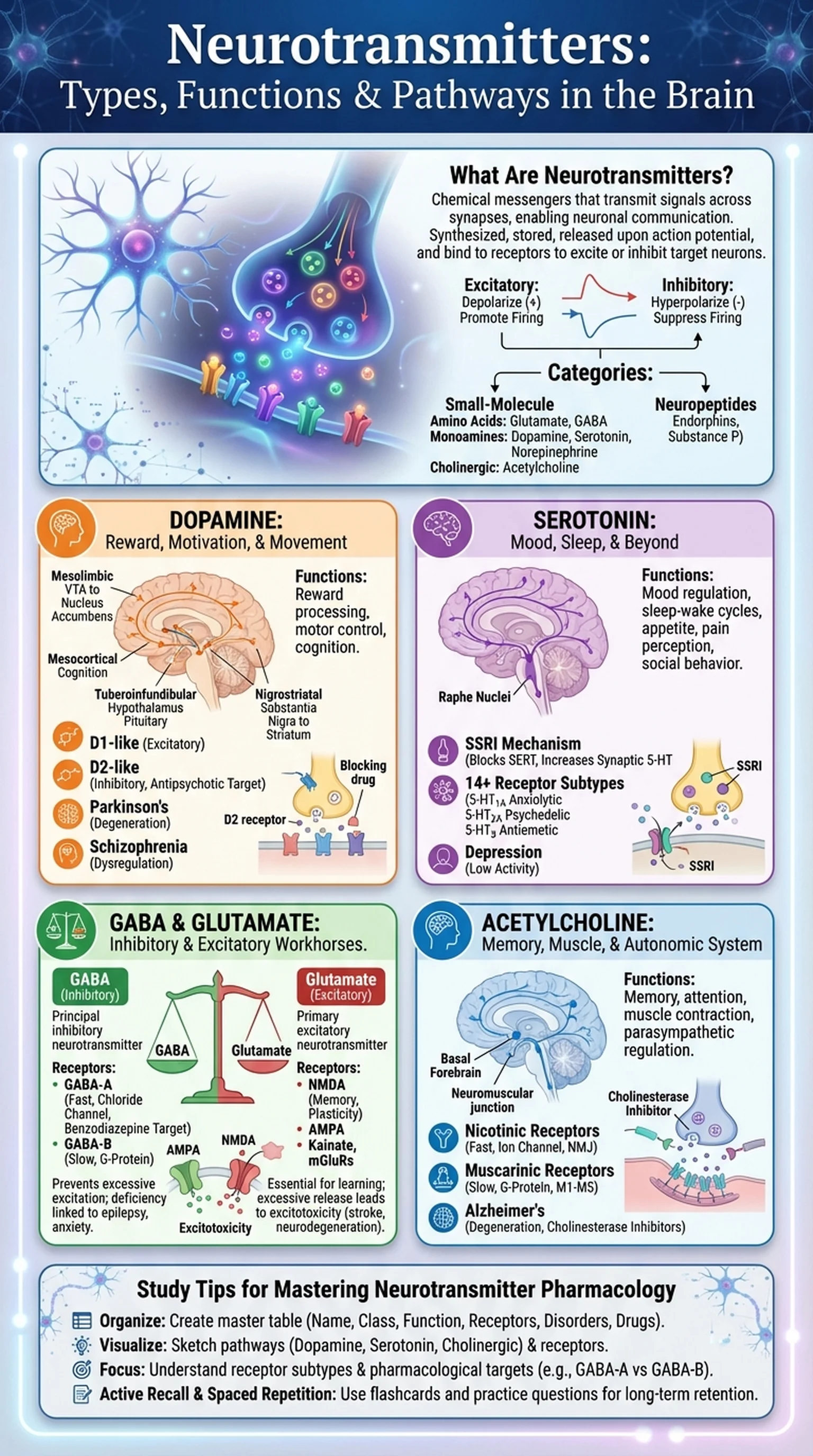
Neurotransmitters are chemical messengers that transmit signals across synapses from one neuron to another, enabling communication within the nervous system. These small molecules are synthesized in the presynaptic neuron, stored in synaptic vesicles, and released into the synaptic cleft upon arrival of an action potential. Once released, neurotransmitters bind to specific receptors on the postsynaptic membrane, triggering changes in ion flow that either excite or inhibit the target neuron. Understanding neurotransmitter function is foundational to neuroscience, psychiatry, and pharmacology.
Neurotransmitters can be classified into several broad categories based on their chemical structure. Small-molecule neurotransmitters include amino acids such as glutamate and GABA, monoamines such as dopamine, serotonin, and norepinephrine, and the cholinergic transmitter acetylcholine. Neuropeptides, a second major category, include endorphins, substance P, and neuropeptide Y. Each neurotransmitter operates through distinct biosynthetic pathways, receptor subtypes, and degradation mechanisms, giving the nervous system remarkable specificity in its signaling.
The concept of neurotransmitter function extends far beyond simple point-to-point signaling. Neurotransmitters modulate mood, cognition, movement, pain perception, and autonomic functions such as heart rate and digestion. Imbalances in neurotransmitter systems underlie numerous neurological and psychiatric disorders, from Parkinson's disease (dopamine deficiency) to depression (altered serotonin signaling) to epilepsy (GABA dysfunction). This overview introduces the major neurotransmitters, their pathways, and their clinical significance, providing a framework for deeper study of brain chemistry.
Key Terms
Chemical messengers released from presynaptic neurons that cross the synaptic cleft to bind receptors on postsynaptic cells, mediating neuronal communication.
The narrow gap between the presynaptic and postsynaptic membranes across which neurotransmitters diffuse to transmit signals.
Excitatory neurotransmitters depolarize the postsynaptic membrane and promote firing, while inhibitory neurotransmitters hyperpolarize it and suppress firing.
Larger neurotransmitter molecules such as endorphins and substance P that modulate neuronal activity and are often co-released with small-molecule transmitters.