What Is a Synapse?
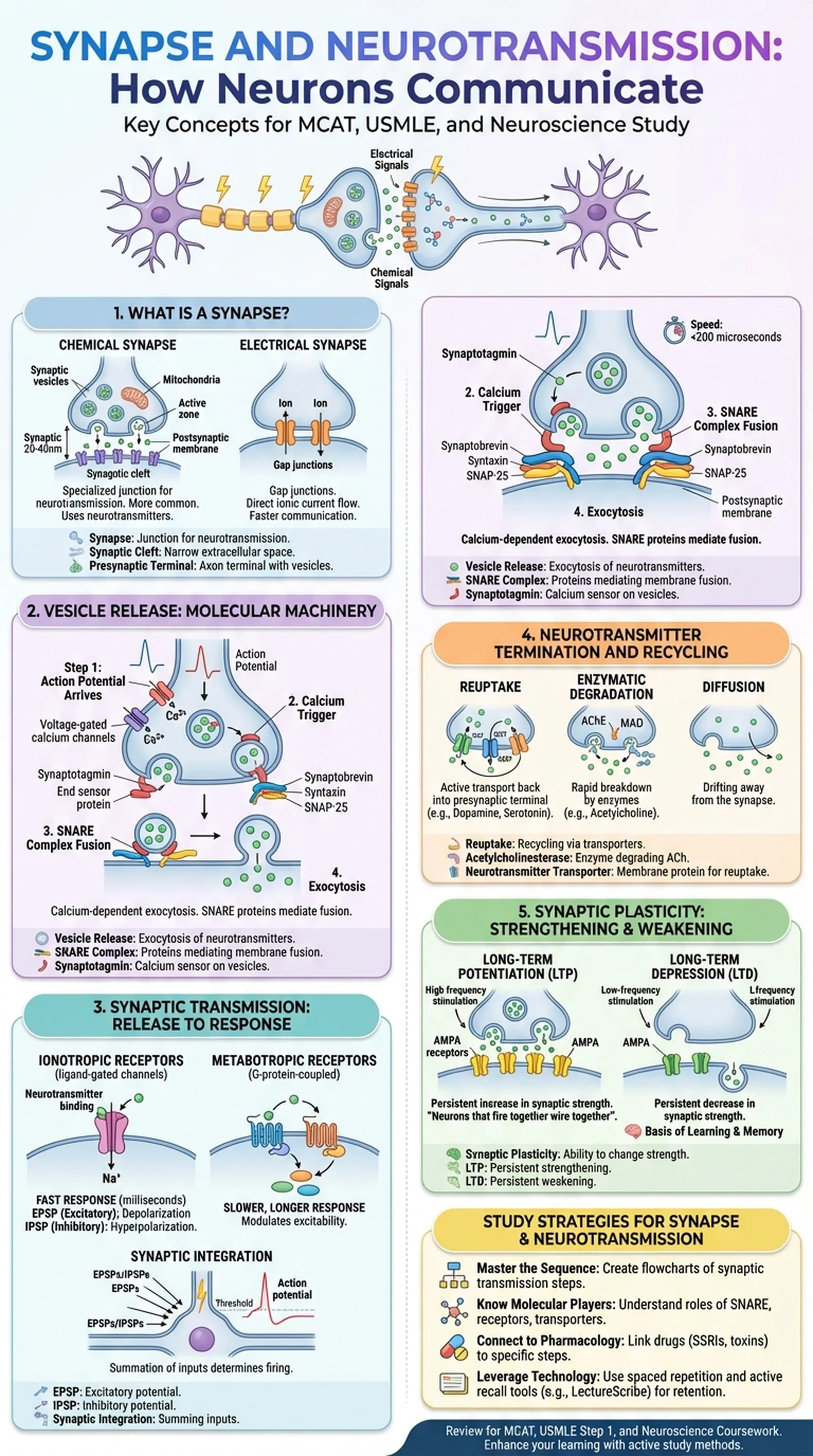
A synapse is the specialized junction between two neurons, or between a neuron and a target cell, where information is transmitted from one cell to another. The concept of the synapse is fundamental to all of neuroscience because it is the site where neurotransmission occurs, the process by which electrical signals in one neuron are converted into chemical or electrical signals that influence the next cell. The term was coined by Charles Sherrington in 1897, and since then, our understanding of synaptic structure and function has expanded enormously.
Synapses can be classified into two broad types: chemical synapses and electrical synapses. Chemical synapses, which are by far the more common type in the human nervous system, rely on the release of neurotransmitter molecules from the presynaptic terminal into the synaptic cleft, the narrow extracellular space separating the two neurons. The neurotransmitter then binds to receptors on the postsynaptic membrane to produce a response. Electrical synapses, also known as gap junctions, allow direct flow of ionic current between neurons through connexin protein channels, enabling faster but less modulable communication.
The structure of a chemical synapse includes three key components: the presynaptic terminal (also called the axon terminal or synaptic bouton), the synaptic cleft, and the postsynaptic membrane. The presynaptic terminal contains mitochondria for energy production, synaptic vesicles loaded with neurotransmitter, and an active zone where vesicle release occurs. The synaptic cleft is approximately 20 to 40 nanometers wide and contains extracellular matrix proteins that help align the presynaptic and postsynaptic specializations. Understanding synapse architecture is essential for grasping how neurotransmission translates neuronal electrical activity into the chemical signals that drive all brain function.
Key Terms
The specialized junction between neurons where neurotransmission occurs, consisting of a presynaptic terminal, synaptic cleft, and postsynaptic membrane.
A synapse that uses neurotransmitter molecules released into the synaptic cleft to transmit signals between neurons.
A synapse formed by gap junctions that allows direct electrical current flow between neurons, enabling rapid communication.
The narrow extracellular space of approximately 20-40 nm between the presynaptic and postsynaptic membranes at a chemical synapse.
The axon terminal of the transmitting neuron, containing synaptic vesicles and the molecular machinery for neurotransmitter release.