Introduction to the Endocrine System
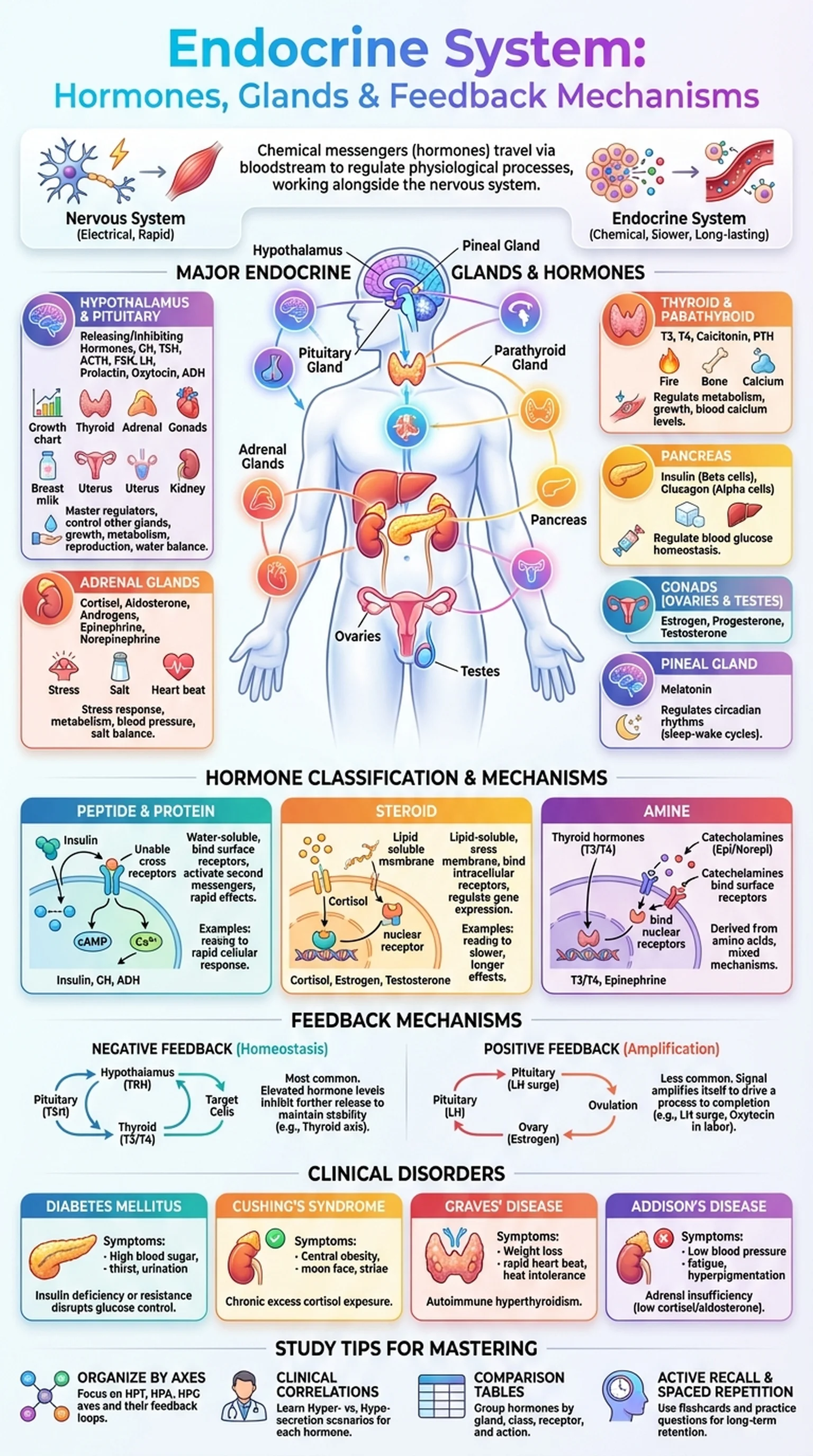
The endocrine system is one of the two major communication systems in the human body, working alongside the nervous system to coordinate physiological processes. While the nervous system uses electrical impulses for rapid, short-lived signaling, the endocrine system relies on chemical messengers called hormones that travel through the bloodstream to reach target cells throughout the body. This system governs virtually every major physiological function, including metabolism, growth, reproduction, stress responses, and the maintenance of internal homeostasis.
The endocrine system is composed of a network of endocrine glands and hormone-producing tissues distributed throughout the body. Unlike exocrine glands, which secrete their products through ducts (such as sweat glands and salivary glands), endocrine glands are ductless and release hormones directly into the surrounding capillary blood. The major endocrine glands include the hypothalamus, pituitary gland, thyroid gland, parathyroid glands, adrenal glands, pancreas, gonads (ovaries and testes), and the pineal gland. Each of these glands produces specific hormones that act on distant target organs to elicit precise physiological responses.
Understanding the endocrine system is fundamental to the study of anatomy, physiology, and clinical medicine. Disorders of hormone regulation underlie some of the most common diseases encountered in clinical practice, including diabetes mellitus, thyroid disease, adrenal insufficiency, and reproductive disorders. For students preparing for board exams, the endocrine system represents a high-yield topic that integrates concepts from cell biology, biochemistry, and organ system physiology into a cohesive framework.
Key Terms
A network of glands and tissues that produce, store, and secrete hormones into the bloodstream to regulate distant target organs and maintain homeostasis.
Chemical signaling molecules produced by endocrine glands that travel through the blood to act on specific target cells bearing the appropriate receptors.
Ductless glands that secrete hormones directly into the bloodstream, including the pituitary, thyroid, adrenal glands, and others.
The maintenance of a stable internal environment within the body, achieved through coordinated physiological processes regulated in part by the endocrine system.