LectureScribe Logo
lecturescribe.io

LOCK IN VALENTINE PRICING BEFORE SALE ENDS!

Use code — New joiners get 40% OFF on annual plans

Plans will have higher prices after this sale ends

0days
:
0hours
:
0minutes
:
0seconds
Pharmacology2,500+ words5 slides
💊

NSAIDs: Mechanism of Action, Types & Side Effects

Understand the NSAID mechanism of action, NSAID types including aspirin and ibuprofen, COX inhibitors, and common NSAID side effects. A complete pharmacology guide.

L
LectureScribeAI-Powered Study Platform

Study Infographic

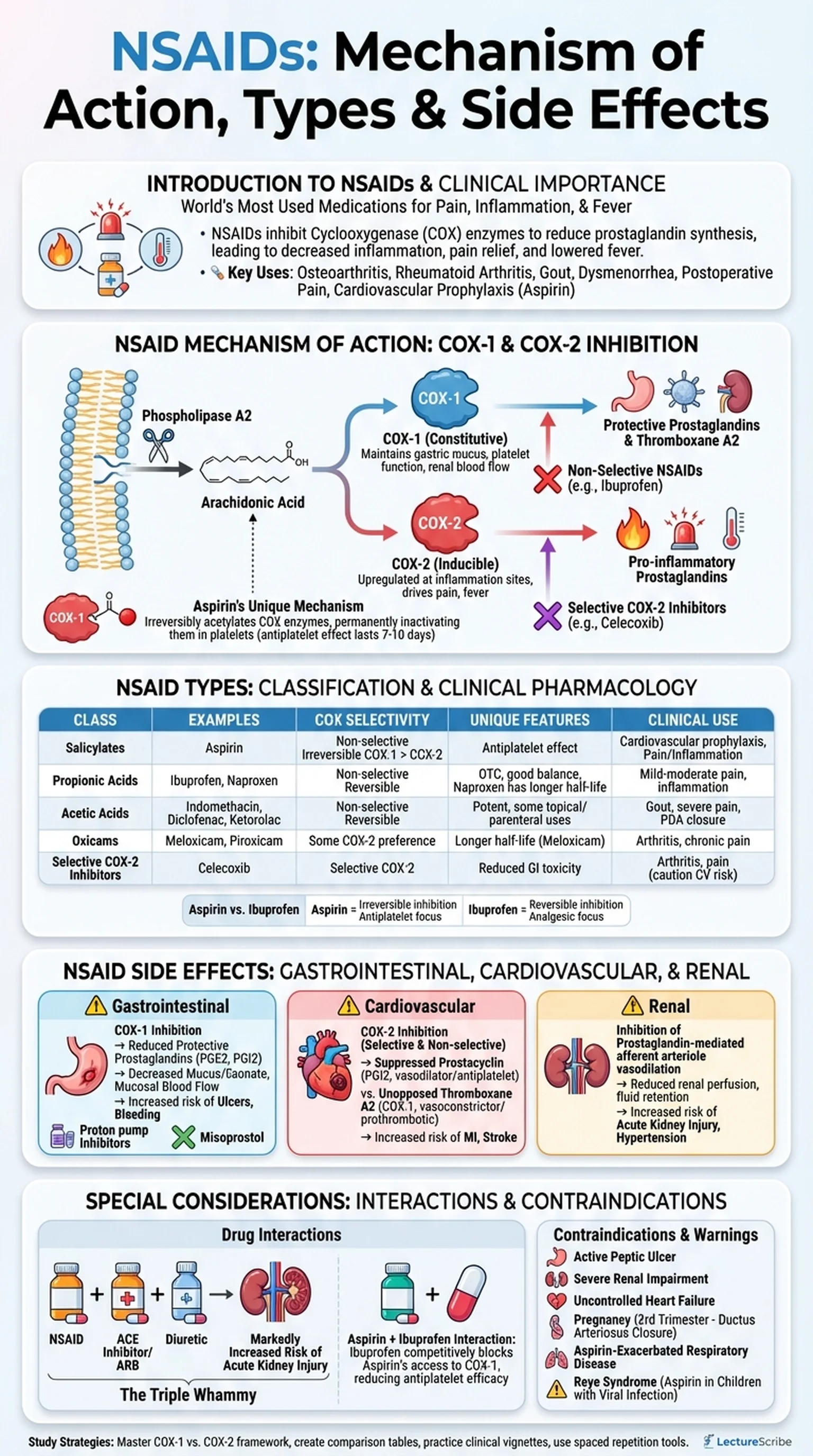
Comprehensive diagram of the NSAID mechanism of action illustrating COX-1 and COX-2 pathways, prostaglandin products, and the clinical effects and side effects of non-selective and selective COX inhibitors.

Download
NSAID mechanism of action diagram showing COX-1 and COX-2 inhibition pathways, prostaglandin synthesis, and side effects of different NSAID types

Interactive Study Short

Swipe through 5 slides about NSAIDs: Mechanism of Action, Types & Side Effects

1 / 5

Introduction to NSAIDs and Their Clinical Importance

Nonsteroidal anti-inflammatory drugs, universally known as NSAIDs, are among the most widely used medications in the world. Every year, billions of doses of NSAIDs are consumed globally for the relief of pain, inflammation, and fever. From over-the-counter staples like aspirin and ibuprofen to prescription-strength agents like indomethacin and ketorolac, NSAID types span a broad range of chemical structures, potencies, and clinical applications. Understanding the NSAID mechanism of action is fundamental to pharmacology education and clinical practice.

NSAIDs exert their effects by inhibiting cyclooxygenase (COX) enzymes, which catalyze the conversion of arachidonic acid into prostaglandins, thromboxanes, and prostacyclins. These lipid mediators play critical roles in inflammation, pain signaling, platelet aggregation, gastric mucosal protection, and renal blood flow regulation. By blocking COX activity, NSAIDs reduce the synthesis of pro-inflammatory prostaglandins, thereby decreasing inflammation, alleviating pain, and lowering fever.

The clinical importance of NSAIDs extends far beyond simple analgesia. These drugs are first-line therapy for conditions ranging from osteoarthritis and rheumatoid arthritis to dysmenorrhea, gout flares, and postoperative pain. Low-dose aspirin remains a cornerstone of cardiovascular prophylaxis due to its irreversible inhibition of platelet thromboxane A2 synthesis. However, the therapeutic benefits of NSAIDs must always be balanced against their potential for significant adverse effects, particularly gastrointestinal, cardiovascular, and renal toxicity. This balance between benefit and risk makes the study of NSAID side effects an essential component of pharmacological education.

Key Terms

NSAID

Nonsteroidal anti-inflammatory drug; a class of medications that reduce inflammation, pain, and fever by inhibiting cyclooxygenase enzymes.

Cyclooxygenase (COX)

An enzyme that catalyzes the conversion of arachidonic acid to prostaglandins and thromboxanes; the primary molecular target of NSAIDs.

Prostaglandin

A lipid mediator derived from arachidonic acid that plays roles in inflammation, pain, fever, gastric protection, and renal function.

Arachidonic Acid

A 20-carbon polyunsaturated fatty acid released from cell membrane phospholipids; the precursor for prostaglandin and thromboxane synthesis.

NSAID Mechanism of Action: COX-1 and COX-2 Inhibition

The NSAID mechanism of action centers on the inhibition of cyclooxygenase enzymes, of which there are two principal isoforms: COX-1 and COX-2. COX-1 is constitutively expressed in most tissues and is responsible for the production of prostaglandins that maintain normal physiological functions, including gastric mucosal protection, platelet aggregation, and renal blood flow. COX-2, by contrast, is primarily an inducible enzyme whose expression is upregulated at sites of inflammation, injury, and infection, where it drives the production of pro-inflammatory prostaglandins.

Traditional NSAIDs, also known as non-selective COX inhibitors, block both COX-1 and COX-2 with varying degrees of selectivity. This dual inhibition explains both the therapeutic anti-inflammatory effects (mediated by COX-2 blockade) and many of the adverse effects (mediated by COX-1 blockade) associated with these drugs. For example, inhibition of COX-1 in the gastric mucosa reduces the production of protective prostaglandins, increasing the risk of peptic ulcers and gastrointestinal bleeding. This pharmacological reality drove the development of selective COX-2 inhibitors, commonly called coxibs.

Selective COX-2 inhibitors such as celecoxib were designed to provide anti-inflammatory and analgesic effects while sparing COX-1-mediated gastric protection. The NSAID mechanism at the molecular level involves the drug entering the active site of the COX enzyme and blocking the access of arachidonic acid to the catalytic site. Aspirin is unique among COX inhibitors because it irreversibly acetylates a serine residue in the active site of both COX-1 and COX-2, permanently inactivating the enzyme in platelets that lack the ability to synthesize new protein. This irreversible mechanism underlies the antiplatelet action of aspirin ibuprofen and other NSAIDs, by contrast, are reversible inhibitors whose effects last only as long as the drug is present at sufficient concentrations.

Key Terms

COX-1

A constitutively expressed cyclooxygenase isoform responsible for producing prostaglandins that maintain gastric mucosal integrity, platelet function, and renal perfusion.

COX-2

An inducible cyclooxygenase isoform upregulated at sites of inflammation; the primary therapeutic target of NSAIDs for anti-inflammatory and analgesic effects.

COX Inhibitors

Drugs that block cyclooxygenase enzymes, including non-selective agents that inhibit both COX-1 and COX-2 and selective agents that primarily target COX-2.

Coxib

A selective COX-2 inhibitor designed to reduce inflammation while minimizing COX-1-related gastrointestinal side effects.

NSAID Types: Classification and Clinical Pharmacology

NSAID types are classified based on their chemical structure, COX selectivity, and pharmacokinetic properties. The major chemical classes include salicylates, propionic acid derivatives, acetic acid derivatives, enolic acid derivatives, and selective COX-2 inhibitors. Each class contains multiple agents with subtle differences in potency, half-life, and tissue distribution that influence clinical selection.

Salicylates are the oldest NSAID class, with aspirin (acetylsalicylic acid) as the prototypical member. Aspirin is unique among NSAID types because of its irreversible COX inhibition, which provides sustained antiplatelet activity. Low-dose aspirin (81-325 mg daily) is widely used for cardiovascular prophylaxis, while higher doses provide analgesic and anti-inflammatory effects. Aspirin ibuprofen comparison is a common exam topic: both relieve pain and inflammation, but aspirin's irreversible mechanism gives it a distinct role in antiplatelet therapy.

Propionic acid derivatives include ibuprofen, naproxen, and ketoprofen. Ibuprofen is one of the most commonly used over-the-counter analgesics worldwide, with a favorable balance of efficacy and tolerability for mild to moderate pain. Naproxen has a longer half-life, allowing twice-daily dosing, and may carry a lower cardiovascular risk compared to other non-selective NSAIDs. Acetic acid derivatives include indomethacin, a potent NSAID used for gout and patent ductus arteriosus closure, diclofenac, widely used topically and orally for musculoskeletal pain, and ketorolac, a parenteral NSAID used for short-term management of moderate to severe pain. Enolic acid derivatives, or oxicams, include piroxicam and meloxicam, the latter of which has preferential COX-2 selectivity.

Selective COX-2 inhibitors, led by celecoxib, were developed to reduce gastrointestinal toxicity. While they achieve this goal to a significant degree, concerns about cardiovascular risk led to the withdrawal of rofecoxib and valdecoxib from the market. Among current NSAID types, celecoxib remains available and is used in patients at high gastrointestinal risk when NSAID therapy is necessary.

Key Terms

NSAID Types

Chemical and pharmacological classifications of NSAIDs, including salicylates, propionic acids, acetic acids, oxicams, and selective COX-2 inhibitors.

Aspirin (Acetylsalicylic Acid)

A salicylate NSAID that irreversibly acetylates COX enzymes, providing anti-inflammatory, analgesic, antipyretic, and antiplatelet effects.

Ibuprofen

A propionic acid derivative NSAID widely used as an over-the-counter analgesic for mild to moderate pain and inflammation.

Celecoxib

A selective COX-2 inhibitor that provides anti-inflammatory effects with reduced gastrointestinal toxicity compared to non-selective NSAIDs.

Aspirin Ibuprofen

A common pharmacological comparison; aspirin irreversibly inhibits COX while ibuprofen is a reversible inhibitor, giving them different clinical roles.

NSAID Side Effects: Gastrointestinal, Cardiovascular, and Renal

NSAID side effects are a major clinical concern and represent the primary limitation of this drug class. The adverse effect profile of NSAIDs is directly related to their NSAID mechanism of COX inhibition, particularly the suppression of prostaglandins that serve protective physiological functions. Understanding these side effects is essential for safe prescribing and for board examination preparation.

Gastrointestinal toxicity is the most common category of NSAID side effects. By inhibiting COX-1, NSAIDs reduce the production of prostaglandin E2 and prostacyclin in the gastric mucosa, which normally stimulate mucus and bicarbonate secretion and maintain mucosal blood flow. The result is an increased risk of dyspepsia, gastric erosions, peptic ulcers, and potentially life-threatening gastrointestinal bleeding. Risk factors for NSAID gastropathy include advanced age, concurrent corticosteroid or anticoagulant use, history of peptic ulcer disease, and high-dose or prolonged NSAID therapy. Proton pump inhibitors and misoprostol (a synthetic prostaglandin analog) can be co-prescribed to mitigate gastrointestinal risk.

Cardiovascular side effects have received increasing attention since the withdrawal of rofecoxib in 2004. Selective COX-2 inhibitors suppress the production of prostacyclin (PGI2) in the vascular endothelium without affecting COX-1-mediated thromboxane A2 synthesis in platelets, creating a prothrombotic imbalance. This mechanism increases the risk of myocardial infarction and stroke, particularly with prolonged use. Non-selective NSAIDs also carry cardiovascular risk, though to varying degrees; naproxen appears to have the most neutral cardiovascular profile among common NSAID types.

Renal side effects of NSAIDs result from the inhibition of prostaglandin-mediated vasodilation of the afferent arteriole. Under normal conditions, this prostaglandin effect is negligible, but in states of reduced renal perfusion such as heart failure, dehydration, or chronic kidney disease, prostaglandin-dependent vasodilation becomes critical for maintaining glomerular filtration. NSAIDs can precipitate acute kidney injury, sodium and water retention, hyperkalemia, and exacerbation of hypertension in these vulnerable patients.

Key Terms

NSAID Side Effects

Adverse effects of NSAIDs including gastrointestinal ulceration, cardiovascular thrombotic events, and renal impairment, arising from COX inhibition.

NSAID Gastropathy

Gastric mucosal damage caused by NSAID-mediated inhibition of protective prostaglandins, leading to ulcers and bleeding.

Prostacyclin (PGI2)

A prostaglandin produced by vascular endothelial cells that promotes vasodilation and inhibits platelet aggregation; suppressed by COX-2 inhibitors.

Thromboxane A2

A prostaglandin produced by platelets via COX-1 that promotes vasoconstriction and platelet aggregation; irreversibly inhibited by aspirin.

Special Considerations: Aspirin, Drug Interactions, and Contraindications

Aspirin occupies a unique position among NSAIDs due to its irreversible inhibition of COX enzymes, which gives it pharmacological properties not shared by other NSAID types. Low-dose aspirin therapy is a cornerstone of secondary cardiovascular prevention, recommended for patients with a history of myocardial infarction, ischemic stroke, or established atherosclerotic disease. The antiplatelet effect of aspirin lasts for the entire lifespan of the platelet, approximately seven to ten days, because platelets are anucleate cells incapable of synthesizing new COX enzyme. When comparing aspirin ibuprofen in clinical practice, it is important to note that concurrent ibuprofen use can interfere with the antiplatelet effect of aspirin by competitively blocking aspirin's access to the COX-1 active site in platelets.

Drug interactions involving NSAIDs are clinically significant and commonly tested on board examinations. NSAIDs reduce the efficacy of antihypertensive drugs, including ACE inhibitors, angiotensin receptor blockers, and diuretics, by blocking prostaglandin-mediated renal sodium excretion. Concurrent use of NSAIDs with anticoagulants such as warfarin increases bleeding risk through both pharmacokinetic and pharmacodynamic mechanisms. The combination of NSAIDs, ACE inhibitors, and diuretics, known as the triple whammy, is associated with a markedly increased risk of acute kidney injury and should be avoided whenever possible.

Contraindications to NSAID use include active peptic ulcer disease, severe renal impairment, uncontrolled heart failure, pregnancy (particularly the third trimester, where COX inhibitors can cause premature closure of the ductus arteriosus), and hypersensitivity reactions including aspirin-exacerbated respiratory disease. Aspirin is also contraindicated in children with viral infections due to the risk of Reye syndrome, a rare but potentially fatal condition affecting the liver and brain. These special considerations underscore the importance of a thorough risk-benefit analysis before initiating any NSAID therapy.

Key Terms

Antiplatelet Effect

The ability of aspirin to irreversibly inhibit platelet COX-1, preventing thromboxane A2 production and reducing platelet aggregation for the platelet's lifespan.

Triple Whammy

The dangerous combination of an NSAID, ACE inhibitor, and diuretic that significantly increases the risk of acute kidney injury.

Reye Syndrome

A rare but serious condition involving liver failure and encephalopathy associated with aspirin use in children with viral infections.

Aspirin-Exacerbated Respiratory Disease

A clinical syndrome of asthma, nasal polyps, and aspirin sensitivity caused by shunting of arachidonic acid metabolism toward leukotriene production.

Study Strategies for NSAID Pharmacology

NSAID pharmacology is a high-yield topic on virtually every medical and pharmacy board examination, including the USMLE Step 1, Step 2 CK, COMLEX, and NAPLEX. The NSAID mechanism of action, the distinctions among NSAID types, and the clinical significance of NSAID side effects are tested repeatedly in both basic science and clinical context questions.

First, master the COX-1 versus COX-2 framework. Nearly every NSAID pharmacology question can be answered by understanding which COX isoform is involved. COX-1 is protective (stomach, platelets, kidneys), while COX-2 is inflammatory. Non-selective NSAIDs block both, causing both therapeutic anti-inflammatory effects and adverse gastrointestinal and renal effects. Selective COX-2 inhibitors spare the stomach but increase cardiovascular risk. Draw and label the arachidonic acid pathway showing COX-1, COX-2, and the prostaglandins produced by each, and you will have a visual framework for answering most questions.

Second, create a comparison table of NSAID types organized by chemical class. Include columns for drug name, COX selectivity, half-life, unique features, and key clinical uses. For example, aspirin: irreversible, antiplatelet; ibuprofen: reversible, OTC analgesic; celecoxib: COX-2 selective, lower GI risk. This table approach helps you quickly differentiate among the many NSAID agents. Third, practice clinical vignette questions involving NSAID side effects and drug interactions, especially the aspirin ibuprofen interaction, the triple whammy combination, and NSAID use in renal impairment.

Finally, leverage study technology to reinforce your learning. Platforms like LectureScribe can generate targeted flashcards and slide decks from your pharmacology notes, using spaced repetition to ensure you retain the COX inhibitors framework and NSAID clinical pharmacology throughout your training.

Key Terms

NSAID Mechanism

The inhibition of cyclooxygenase enzymes by NSAIDs, blocking prostaglandin synthesis to produce anti-inflammatory, analgesic, and antipyretic effects.

Arachidonic Acid Pathway

The metabolic pathway by which arachidonic acid is converted to prostaglandins by COX enzymes and to leukotrienes by lipoxygenase.

Spaced Repetition

A learning strategy that involves reviewing material at increasing intervals to strengthen long-term memory retention.

Frequently Asked Questions

What is the NSAID mechanism of action?

The NSAID mechanism of action involves inhibiting cyclooxygenase (COX) enzymes, which convert arachidonic acid into prostaglandins. By blocking COX-1 and COX-2, NSAIDs reduce prostaglandin-mediated inflammation, pain, and fever. The degree of selectivity for each COX isoform varies among different NSAID types.

What are the main NSAID types?

The main NSAID types include salicylates (aspirin), propionic acid derivatives (ibuprofen, naproxen), acetic acid derivatives (indomethacin, diclofenac, ketorolac), enolic acid derivatives (piroxicam, meloxicam), and selective COX-2 inhibitors (celecoxib). Each type has distinct pharmacokinetic properties and clinical applications.

What are common NSAID side effects?

Common NSAID side effects include gastrointestinal toxicity (dyspepsia, peptic ulcers, GI bleeding), cardiovascular risk (increased myocardial infarction and stroke with prolonged use), renal impairment (decreased GFR, sodium retention, hyperkalemia), and other effects such as hypertension and allergic reactions.

How do COX inhibitors differ from each other?

COX inhibitors differ in their selectivity for COX-1 versus COX-2. Non-selective COX inhibitors like ibuprofen block both isoforms, providing anti-inflammatory effects but causing GI and renal side effects. Selective COX-2 inhibitors like celecoxib preferentially block COX-2, reducing GI toxicity but potentially increasing cardiovascular risk.

What is the difference between aspirin and ibuprofen?

Aspirin irreversibly acetylates COX enzymes, providing sustained antiplatelet activity for the lifespan of the platelet. Ibuprofen is a reversible COX inhibitor whose effects last only as long as the drug is present. This makes aspirin ibuprofen distinct in clinical use: aspirin for cardiovascular prevention and ibuprofen primarily for pain and inflammation.

Why are selective COX-2 inhibitors associated with cardiovascular risk?

Selective COX-2 inhibitors suppress prostacyclin (PGI2) production in vascular endothelium without affecting platelet thromboxane A2 synthesis. This creates a prothrombotic imbalance that increases the risk of atherothrombotic events such as myocardial infarction and stroke, particularly with prolonged use.

When should NSAIDs be avoided?

NSAIDs should be avoided in patients with active peptic ulcer disease, severe renal impairment, uncontrolled heart failure, third-trimester pregnancy, and aspirin hypersensitivity. They should also be used cautiously with anticoagulants, ACE inhibitors, and diuretics due to significant drug interaction risks.

Study Pharmacology Smarter

Upload your lecture notes and get AI-generated flashcards, quizzes, infographics, and study guides tailored to your curriculum.

Try LectureScribe Free

Create Study Materials

Transform your Pharmacology lectures into flashcards, quizzes, and visual study guides with AI.

  • AI-generated flashcards & quizzes
  • Visual infographics from notes
  • Interactive study shorts
Start Studying Free

Quick Facts

SubjectPharmacology
Word Count2,500+
Slides5
InfographicIncluded
AuthorLectureScribe

Master Pharmacology with LectureScribe

Upload your lecture notes and get AI-powered flashcards, quizzes, infographics, and study guides in minutes.