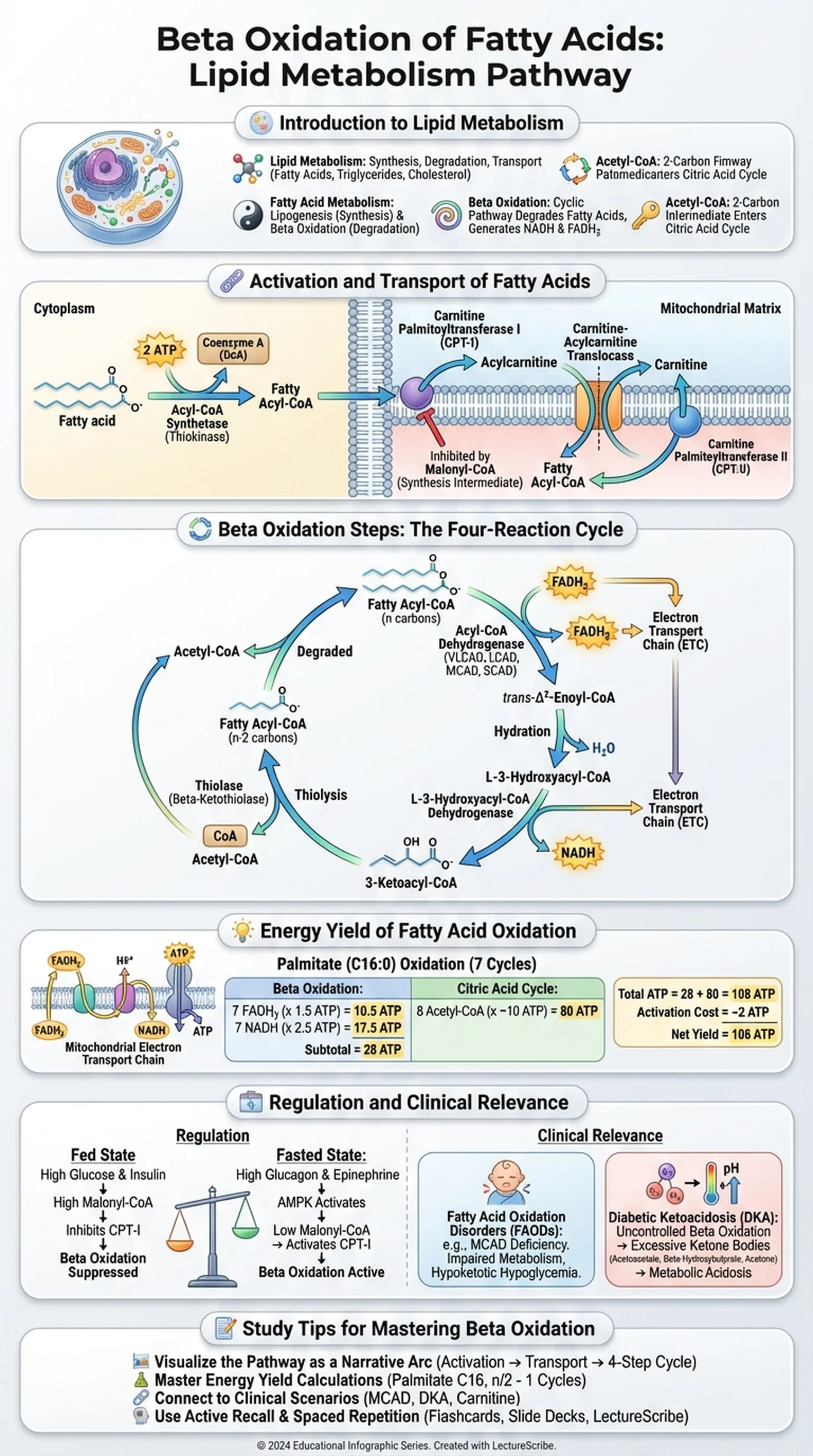
Introduction to Lipid Metabolism
Lipid metabolism encompasses all the biochemical reactions involved in the synthesis, degradation, and transport of lipids, including fatty acids, triglycerides, phospholipids, and cholesterol. Among these processes, the oxidation of fatty acids is one of the most important energy-yielding pathways in the human body. Gram for gram, fatty acids produce more than twice the ATP of carbohydrates, making lipid metabolism a critical energy source during fasting, prolonged exercise, and periods of caloric restriction.
The central pathway of fatty acid degradation is beta oxidation, a cyclical process that sequentially removes two-carbon units from fatty acid chains in the form of acetyl-CoA. Each cycle of beta oxidation also generates one molecule of FADH2 and one molecule of NADH, which feed into the electron transport chain to produce ATP via oxidative phosphorylation. The acetyl-CoA produced enters the citric acid cycle for further oxidation. Together, these processes allow cells to extract the enormous energy stored in the long hydrocarbon chains of fatty acids.
Understanding lipid metabolism and fatty acid metabolism is essential for students of biochemistry, medicine, and nutrition. Disorders of fatty acid oxidation, such as medium-chain acyl-CoA dehydrogenase (MCAD) deficiency, can cause life-threatening metabolic crises in infants. Obesity, diabetes, and cardiovascular disease all involve dysregulation of lipid metabolism. The therapeutic strategies for these conditions often target enzymes and transporters involved in fatty acid oxidation, underscoring the clinical relevance of mastering this pathway.
Key Terms
The complete set of biochemical processes involved in the synthesis, degradation, and transport of lipids, including fatty acids, triglycerides, and cholesterol.
The metabolic pathways responsible for the synthesis (lipogenesis) and degradation (beta oxidation) of fatty acids.
A cyclic metabolic pathway that degrades fatty acids by sequentially removing two-carbon acetyl-CoA units, generating NADH and FADH2.
A two-carbon metabolic intermediate produced by beta oxidation that enters the citric acid cycle for complete oxidation.