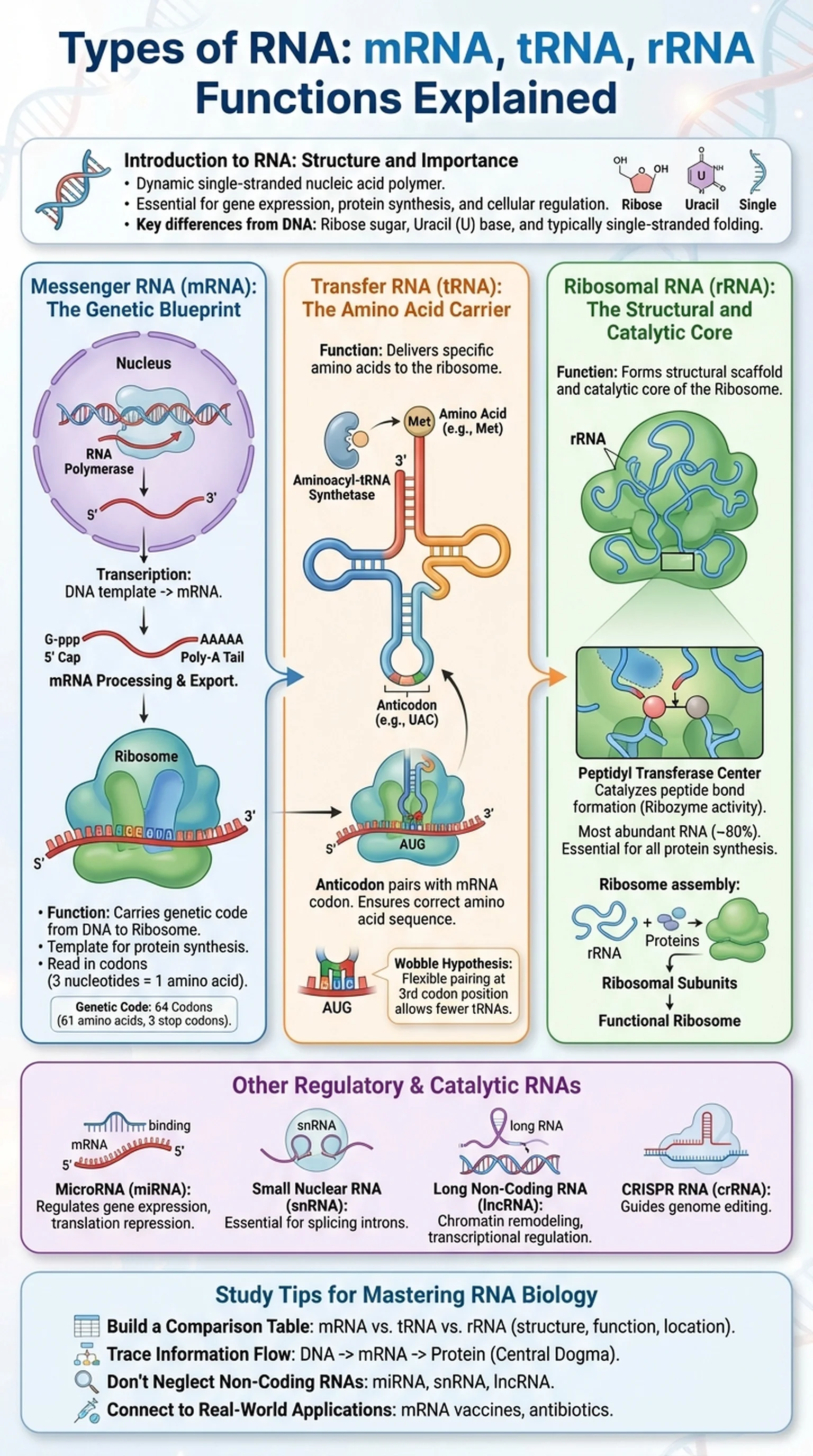
Introduction to RNA: Structure and Importance
Ribonucleic acid, or RNA, is a single-stranded nucleic acid polymer that plays diverse and essential roles in gene expression, protein synthesis, and cellular regulation. While DNA serves as the permanent storage medium for genetic information, the various types of RNA act as the dynamic intermediaries that translate that information into functional proteins and regulatory signals. Understanding RNA function is central to molecular biology and is one of the most heavily tested topics on exams such as the MCAT, AP Biology, and GRE Biology.
Structurally, RNA differs from DNA in three important ways. First, RNA contains the sugar ribose rather than deoxyribose. Second, RNA uses the nitrogenous base uracil (U) in place of thymine (T). Third, RNA is typically single-stranded, although it can fold into complex secondary and tertiary structures through intramolecular base pairing. These structural features give RNA the flexibility to perform functions that range from carrying genetic messages to catalyzing chemical reactions.
The three major types of RNA involved in protein synthesis are messenger RNA (mRNA), transfer RNA (tRNA), and ribosomal RNA (rRNA). Each performs a distinct RNA function that is indispensable for translating the genetic code into polypeptide chains. Messenger RNA carries the genetic blueprint from DNA to the ribosome. Transfer RNA delivers amino acids to the ribosome in the correct sequence. Ribosomal RNA forms the structural and catalytic core of the ribosome itself. Together, these three types of RNA coordinate the intricate process of translation, and understanding how they work individually and cooperatively is fundamental to mastering molecular biology.
Key Terms
A single-stranded nucleic acid polymer made of ribonucleotides that functions in gene expression, protein synthesis, and cellular regulation.
The major categories of RNA molecules including mRNA, tRNA, and rRNA, each performing distinct functions in protein synthesis and gene expression.
The five-carbon sugar found in RNA nucleotides, distinguished from deoxyribose in DNA by the presence of a hydroxyl group on the 2' carbon.
The nitrogenous base unique to RNA that pairs with adenine, replacing thymine found in DNA.