What Is Cellular Respiration?
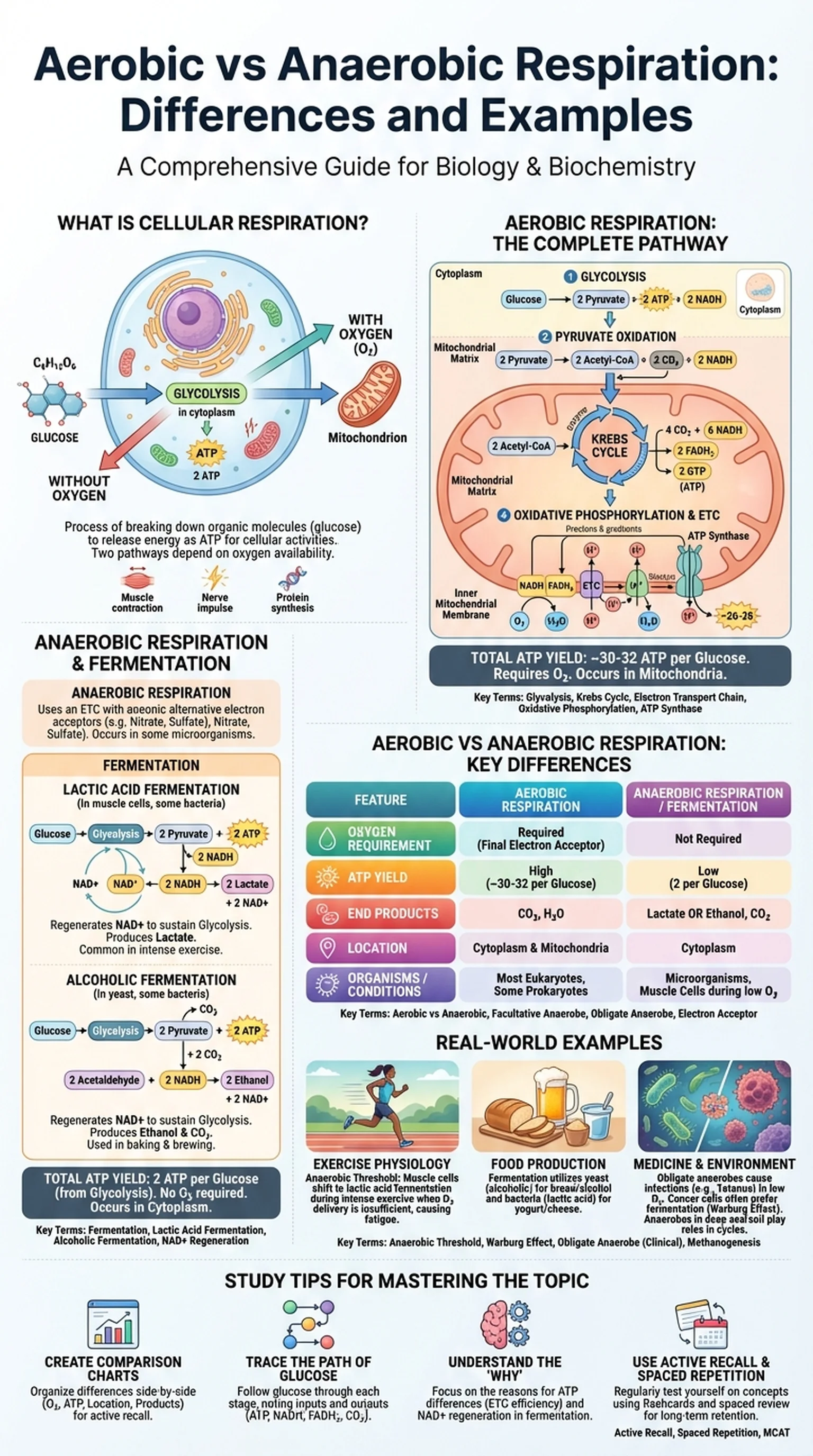
Cellular respiration is the metabolic process by which living organisms break down organic molecules, primarily glucose, to release energy in the form of ATP (adenosine triphosphate). This energy powers virtually every cellular activity, from muscle contraction and nerve impulse transmission to protein synthesis and cell division. Cellular respiration can proceed along two fundamentally different pathways depending on whether oxygen is available: aerobic respiration and anaerobic respiration.
Aerobic respiration requires oxygen as the final electron acceptor and is the primary energy-producing pathway in most eukaryotic organisms, including humans, animals, and plants. It occurs in the mitochondria and yields a large amount of ATP per glucose molecule. Anaerobic respiration, by contrast, occurs in the absence of oxygen and relies on alternative electron acceptors or fermentation pathways. While it produces far less ATP, anaerobic respiration is essential for organisms that live in oxygen-poor environments and for cells that temporarily outstrip their oxygen supply, such as muscle cells during intense exercise.
The comparison of aerobic vs anaerobic respiration is a foundational topic in biology, appearing on exams from AP Biology to the MCAT. Understanding how these pathways differ in their oxygen requirements, energy yields, end products, and biological contexts is essential for grasping how organisms adapt to diverse environments. The following sections break down each pathway in detail and highlight the key differences between them.
Key Terms
The metabolic process by which cells break down glucose and other organic molecules to produce ATP for energy.
The primary energy currency of the cell, produced during both aerobic and anaerobic respiration.
A metabolic pathway that uses oxygen to completely oxidize glucose, producing a large amount of ATP in the mitochondria.
A metabolic pathway that produces ATP without oxygen, using alternative electron acceptors or fermentation.